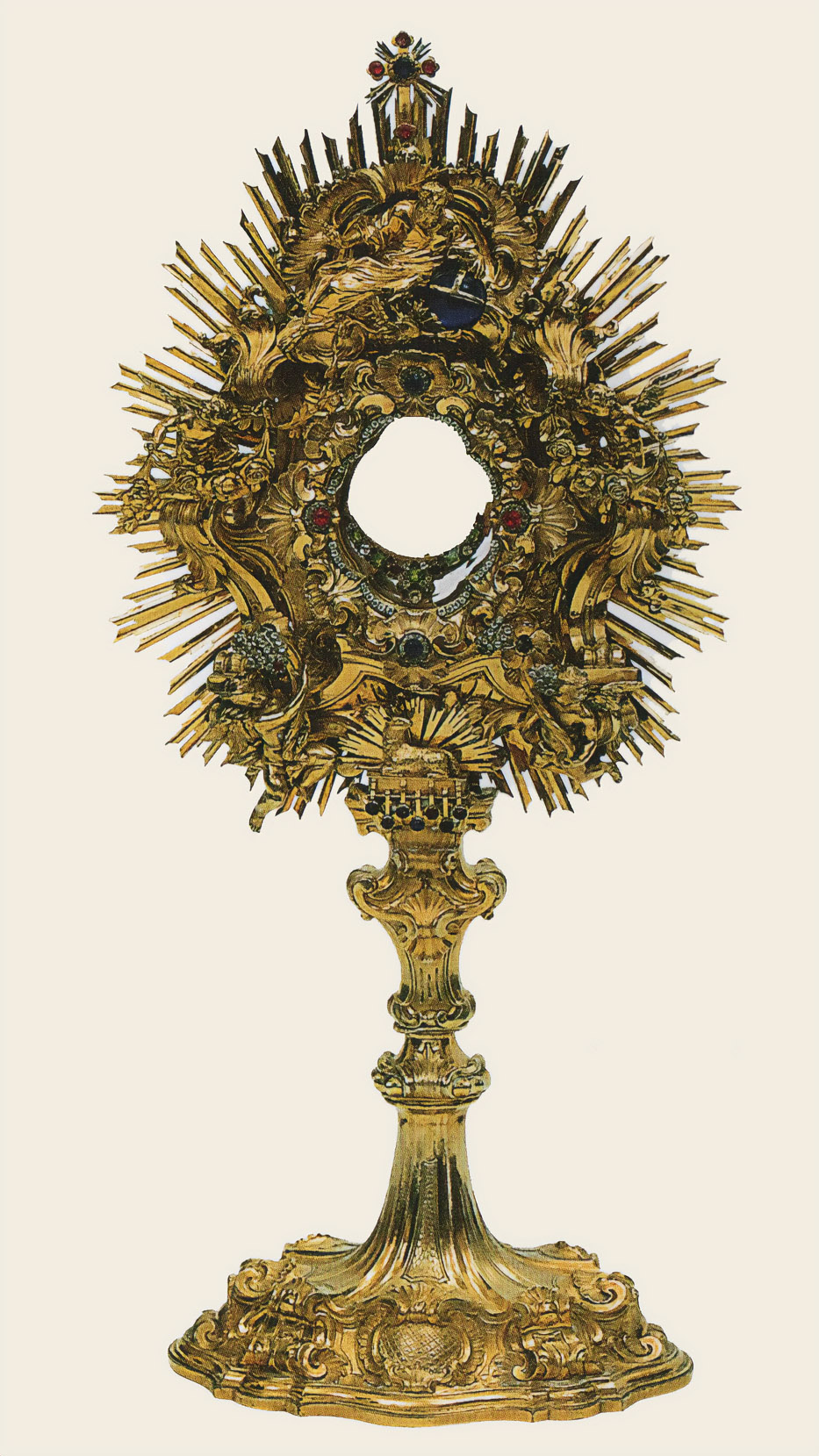
Monstrance, made in 1755 in Vienna.
The author is master I.I.K.
Details about materials and dimensions:
- Material: silver, hammered, cast, chased, gilded, stones
- Height: 71.5 cm
- Width: 33.5 cm
- Base dimensions: 28 x 19.6 cm


The liturgical vessels of St. James’s Church in Ljubljana bear witness to a rich history and the generosity of nobles and church dignitaries, most notably Bishop Thomas Hren. Most pieces date from the Jesuit period (1597–1773), when noble families such as the Auerspergs, Codellis, Rossis, and Schönlebens donated precious vessels. Of the many treasures once held by the church, only a few selected pieces remain today: Hren’s ciborium, silver chalices, and richly decorated monstrances attributed to masters from Augsburg, Graz, and Ljubljana, all reflecting the pinnacle of Baroque and Rococo goldsmith artistry.
The liturgical vessels of the Jesuit Church of St. James in Ljubljana testify to a rich tradition, generosity, and artistic excellence that the church achieved especially between the arrival of the Jesuits in 1597 and the suppression of the order in 1773. Many precious pieces of liturgical equipment were gifts from prominent individuals such as Bishop Thomas Hren, Archduchess Maria, and noble families including the Auerspergs, Codellis, Rossis, Colaltos, and many others. These benefactors donated ciboria, chalices, reliquaries, and other sacred objects.
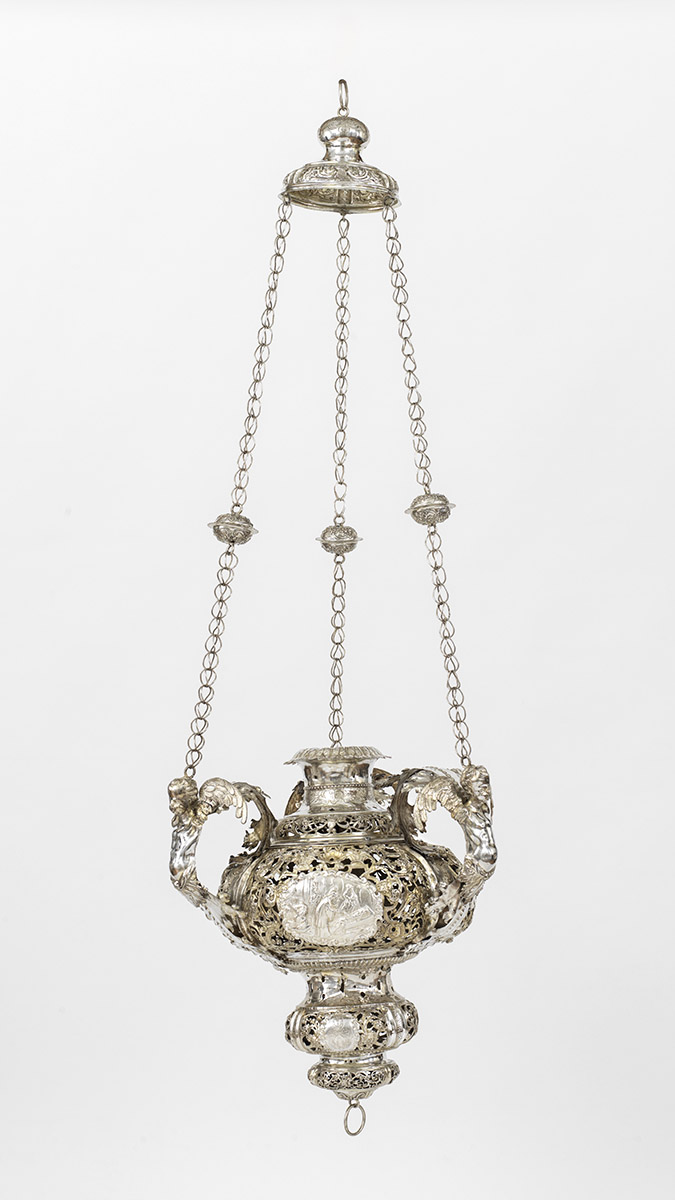
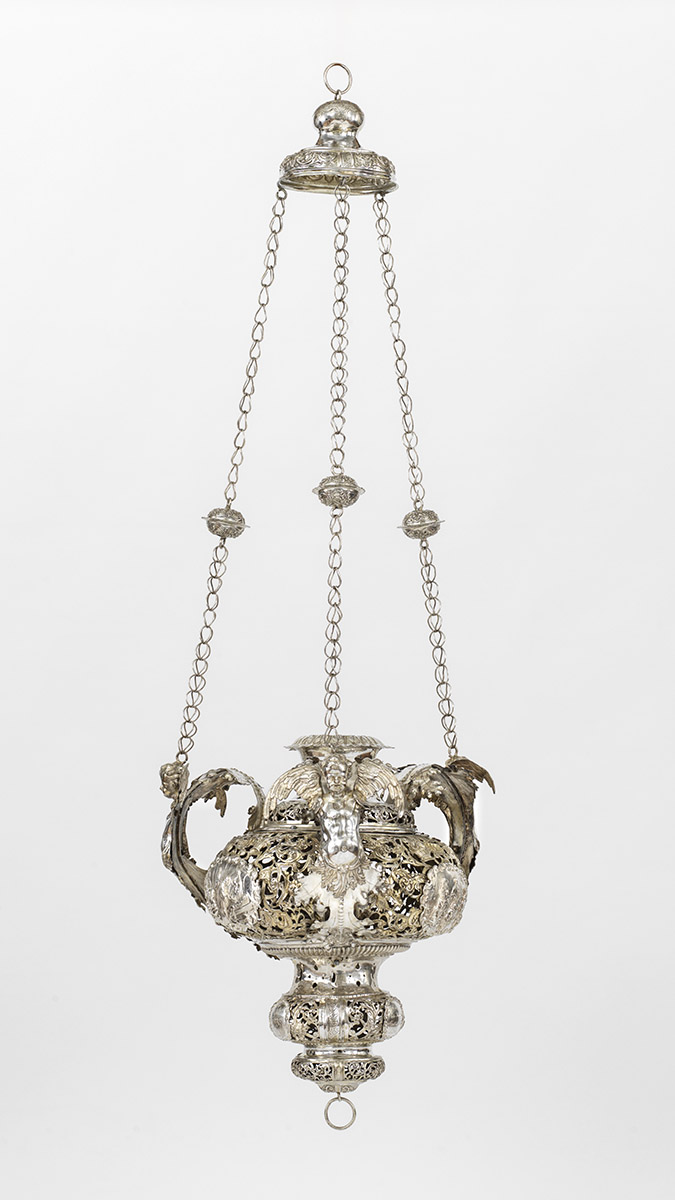
Bishop Hren, one of the most important patrons, donated the renowned silver ciborium to the church in 1608—remarkably, the only piece from that time that survives to this day. Historical records indicate that many valuable liturgical items were commissioned from Augsburg, one of Central Europe’s leading goldsmithing centers, home to master craftsmen such as J. Zeckel and A. I. Drentwett. A notable example is the richly ornamented silver sanctuary lamp, commissioned in 1722 by the Carniolan nobleman J. A. Rasp.
Particularly intriguing is the history of the items acquired after 1773, when the Jesuit order was dissolved and a fire in 1774 destroyed much of the church’s interior. At that time, many valuables were melted down to fund the church’s restoration. Nevertheless, some remarkable pieces survived: a silver pax from 1724, chalices from 1728, a richly decorated ciborium and a silver thurible from 1752, and an elaborate Rococo monstrance commissioned in Vienna in 1755.
The goldsmith works preserved in the church often bear master’s marks, allowing for detailed art historical analysis. Among the outstanding surviving pieces is a chalice by Leopold Vogtner of Graz, renowned for its rich ornamentation and enameled medallions depicting scenes related to St. James’s Church.
The 18th century also saw notable works by Ljubljana goldsmiths such as Andreas and Josef Piringer, Jakob Schmid, and Matevž Schreiner, whose Neo-Baroque furnishings from the 19th century are especially valued.
In more recent times, the church’s collection has been enriched by works from local Ljubljana metalwork masters such as Ivan Kregar, Janez Dernovšek, and the Samass Foundry. The liturgical vessels of St. James’s Church thus remain an exceptional example of artistic heritage, reflecting the evolution of goldsmithing from the Renaissance through to later historical styles.


This post is also available in DE, ES, FR, SI, IT, PL and SI.