

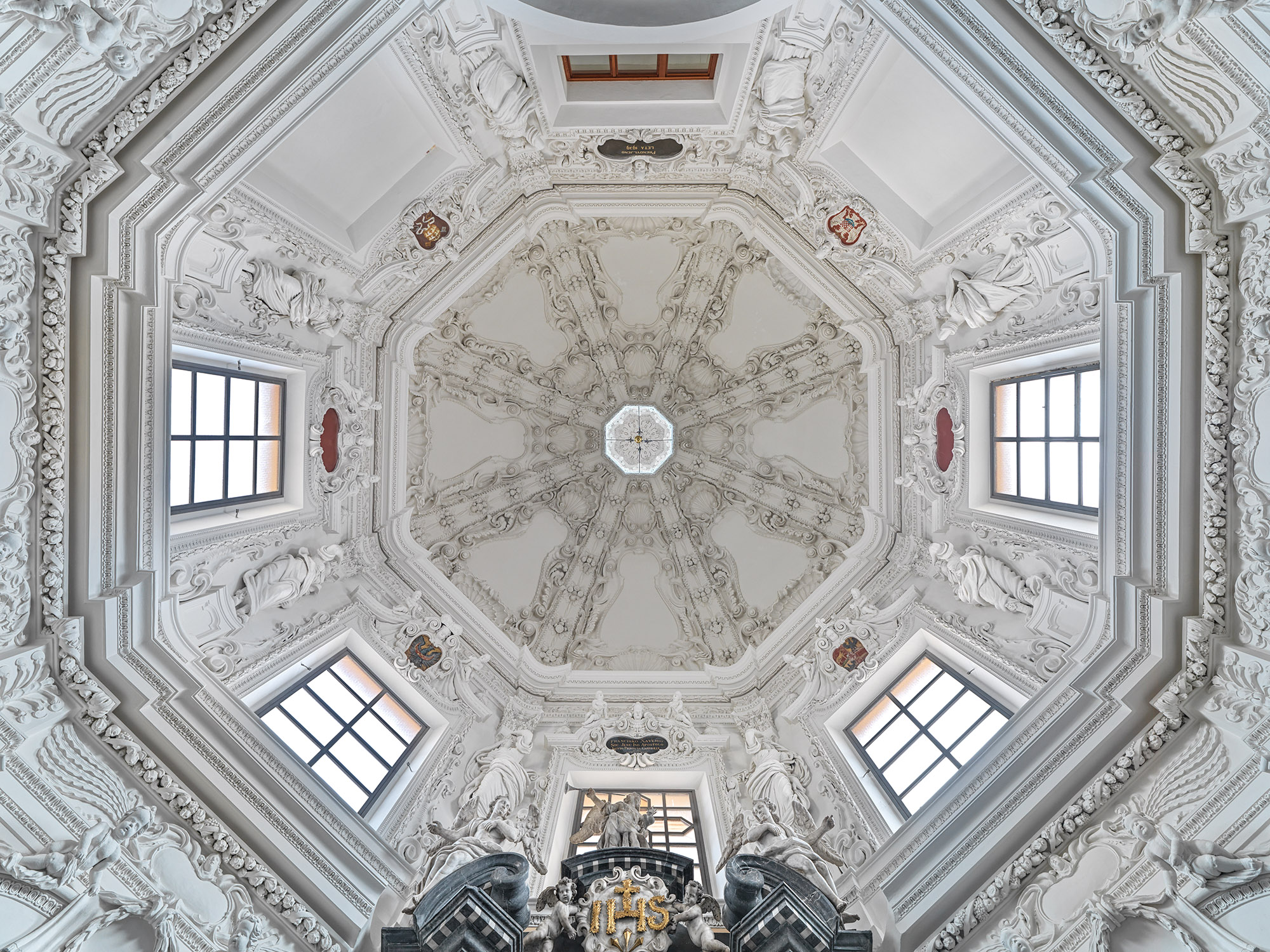
The Chapel of St. Francis Xavier, added between 1667 and 1670, is the only preserved example of stucco Baroque in Ljubljana. Its octagonal design is adorned with dynamic stucco decoration, eight caryatids, rich ornamentation, and a dome with a lantern. The chapel is complemented by six large oil paintings depicting scenes from the saint’s life (1726), set in stucco frames. The artist is unknown, but likely Daniel Savoy. The central altarpiece, The Apotheosis of St. Francis Xavier, is the work of Paul Kühn from the mid-19th century.

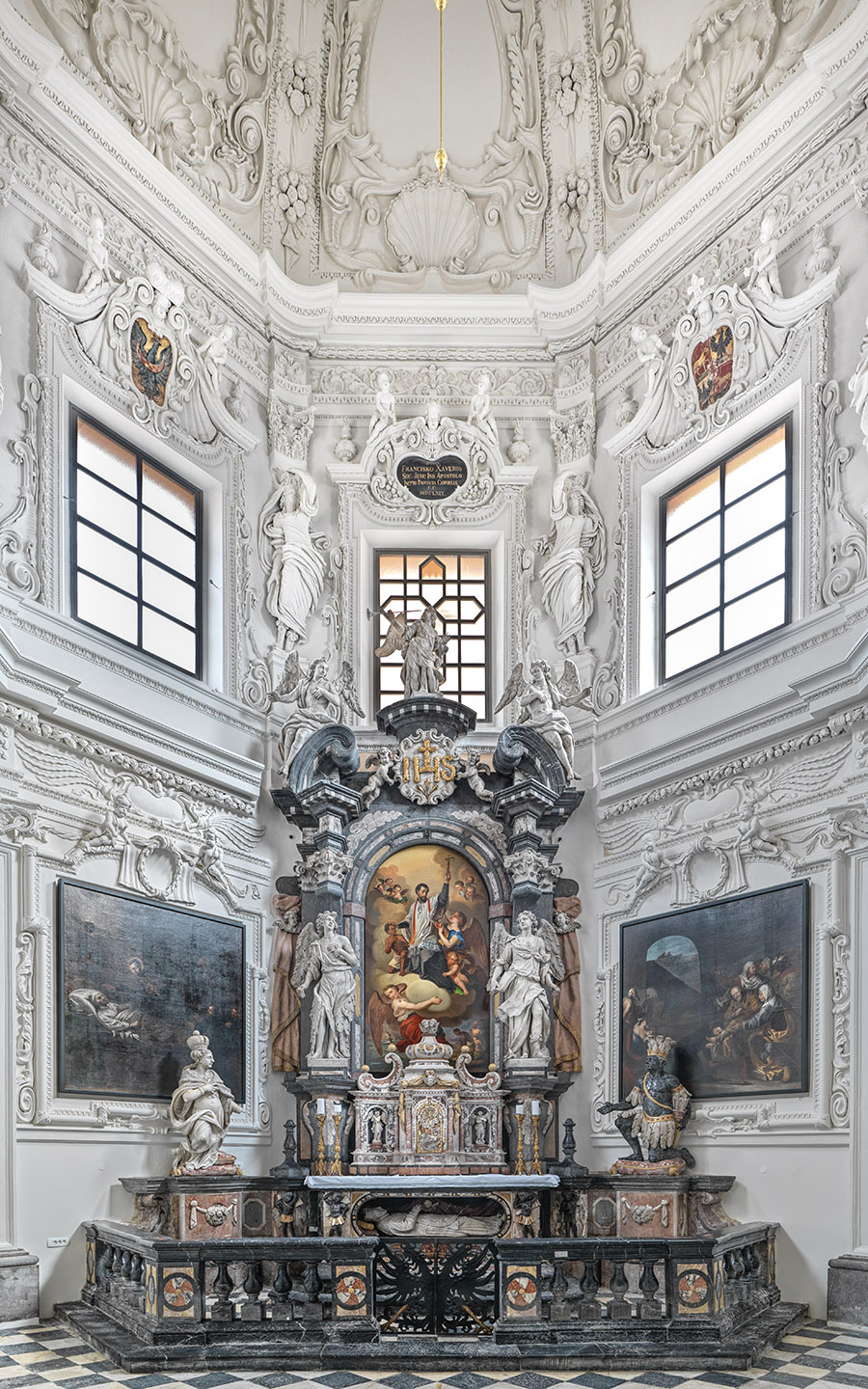
The Chapel of St. Francis Xavier was added to the northern side of St. James’s Church between 1667 and 1670. The entrance to the chapel leads through a large archway from the first northern chapel in front of the presbytery. Its octagonal floor plan and high central composition represent the only preserved example of so-called stucco Baroque in Ljubljana. The architectural design follows Lombard-Venetian models and is comparable to the work of Diego Carlone and his workshop. The octagonal shape allowed for a rich and dynamic stucco decoration that differs from the schemes typical of rectangular spaces.
The chapel is covered by a tent-like, eight-lobed dome with a lantern. The space is divided into two levels: the lower level features stucco-framed painting fields, while the upper level contains windows with elaborate stucco decoration. Above the windows sit pairs of putti holding cartouches with coats of arms of the provincial estates. In the cartouche above the altar is a dedication from Carniola dated 1669. The corners of the space are framed by pilasters that, in the upper level, transition into almost fully sculpted caryatids—eight in total, distributed throughout the upper zone. The vault fields are bordered with diverse ornamentation, including shells, acanthus leaves, ear-shaped motifs, and cartilage forms. The pictorial fields on the ground floor were covered with paintings on canvas, while the pear-shaped cartouches in the vault remain unpainted.
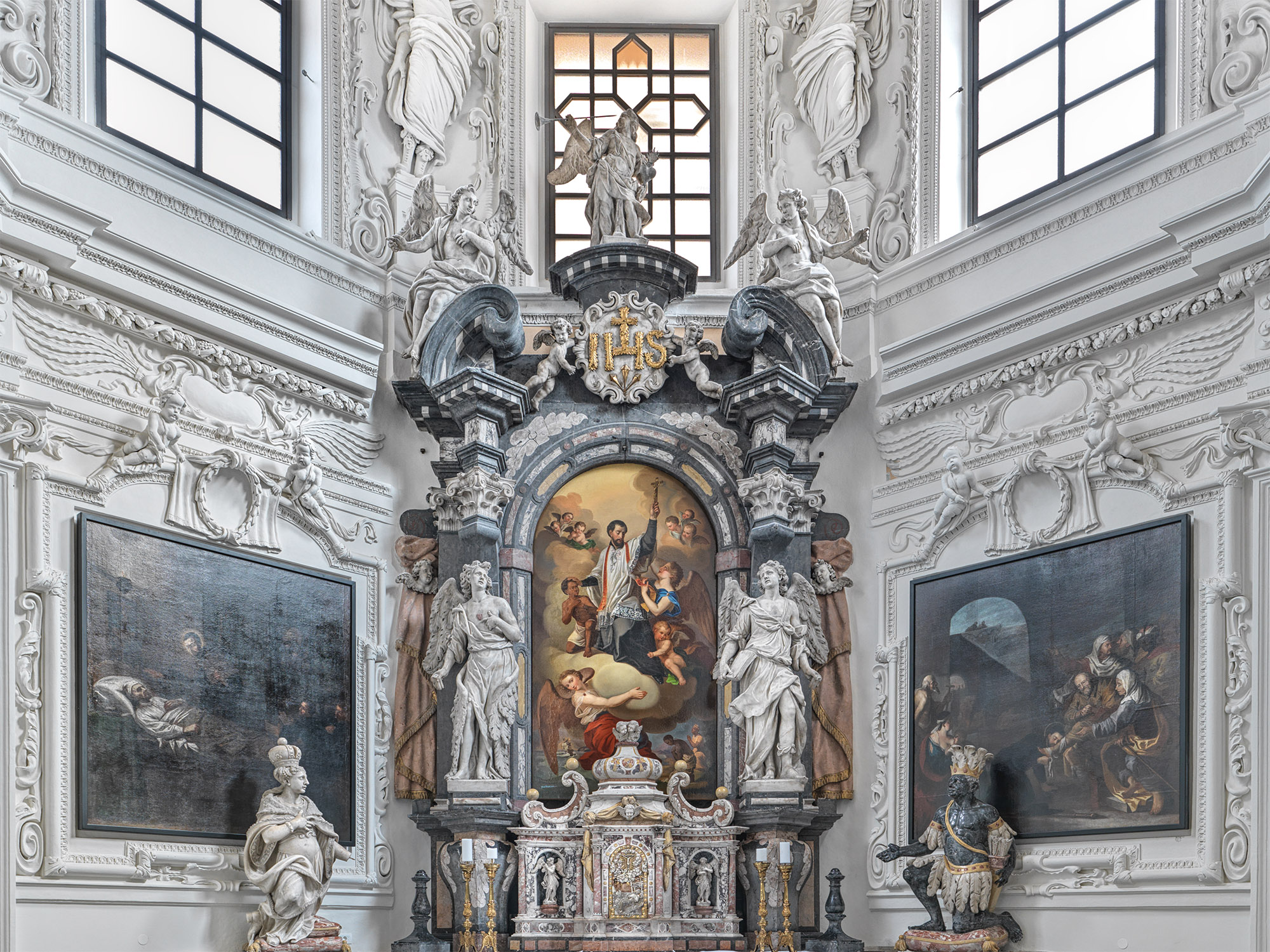
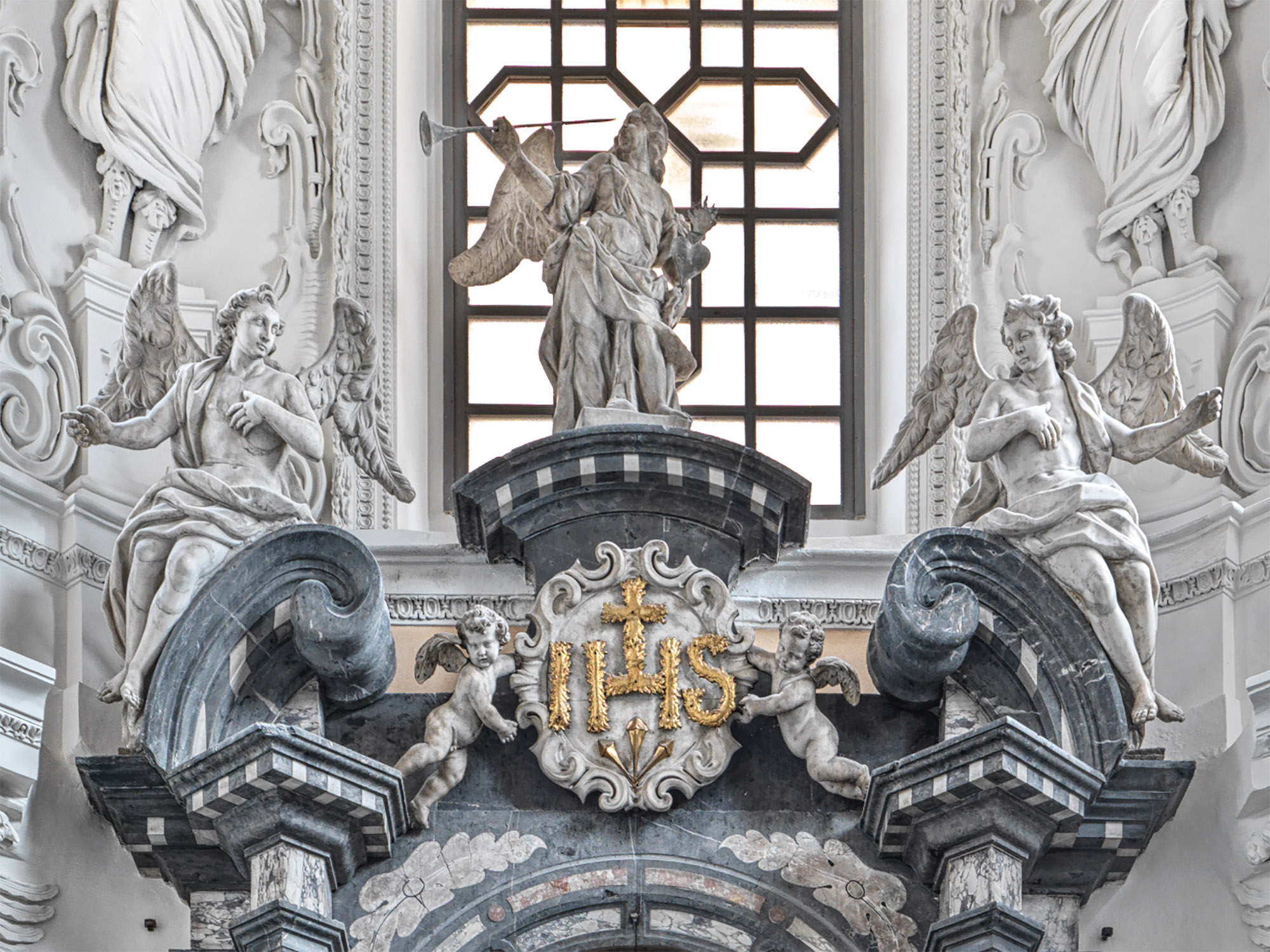
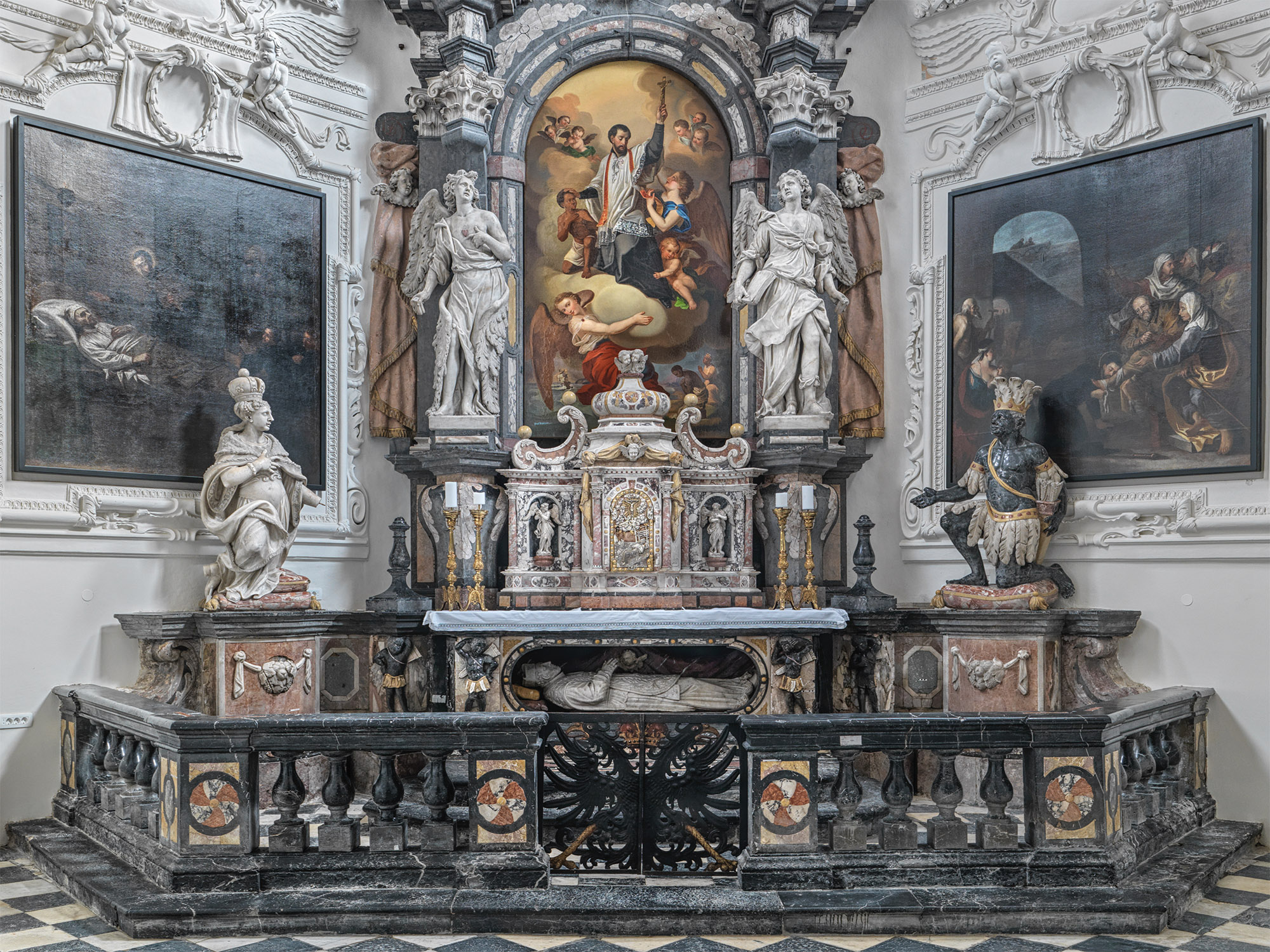
The interior of the chapel is enriched by exceptional artistic furnishings. The monumental stone altar, crafted between 1709 and 1720 by the Ljubljana stonemasonry workshop of Franc Grumnik, features over ten full-length marble statues by Italian Baroque sculptors. At its center, the mensa supported by four Moorish figures holds a statue of the saint in priestly vestments, referencing his incorrupt body kept in Goa. Flanking him are a seraph and a cherub—sculpted by Paolo Gropelli. In 1719, the tabernacle was expanded with marble angels in niches, and in 1720, it was further adorned with statues of Europe and Africa, carved by Jacopo Contieri. At the top of the altar stands a trumpet-blowing angel by Angelo Putti.
The chapel also features six large oil paintings (1726) depicting scenes from the life of the saint, set in stucco frames. The artist is unknown, but is likely Daniel Savoy, a painter from Dresden who converted to Catholicism in this very church. The central altarpiece, The Apotheosis of St. Francis Xavier, is the work of Paul Kühn from the mid-19th century.

This post is also available in DE, ES, FR, SI, IT, PL and SI.