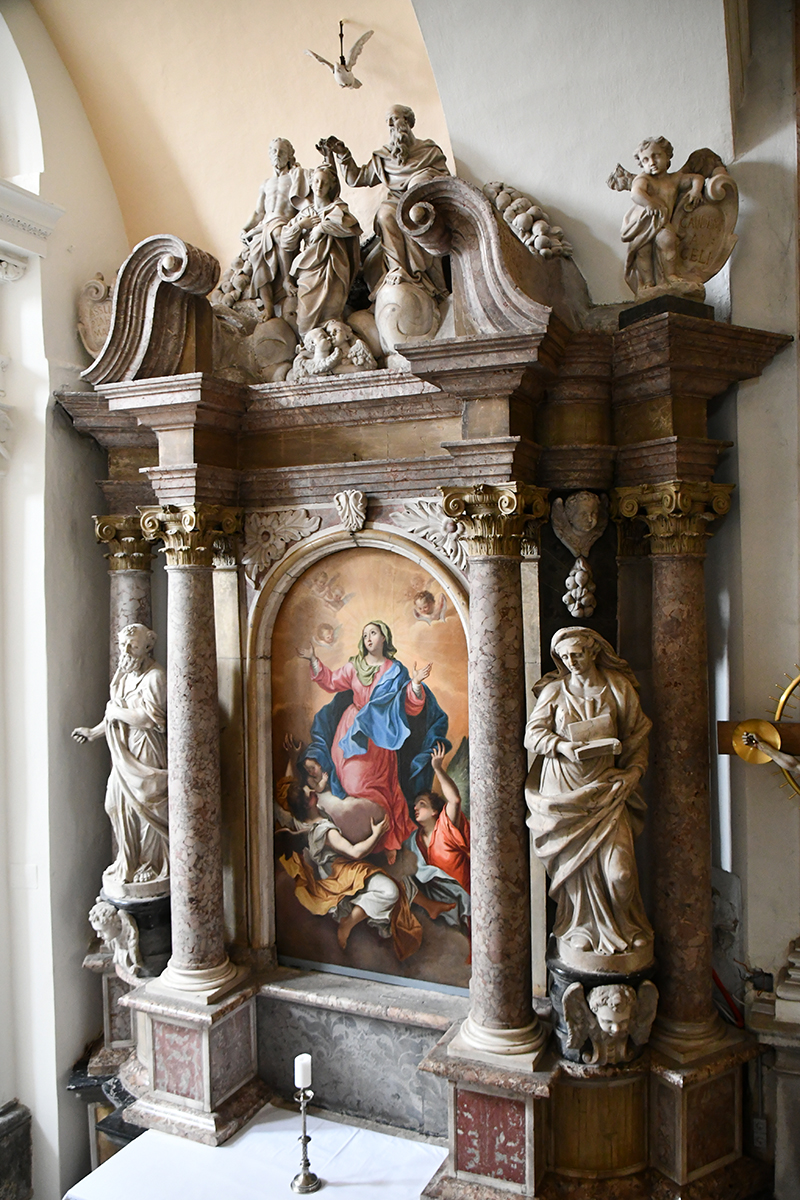
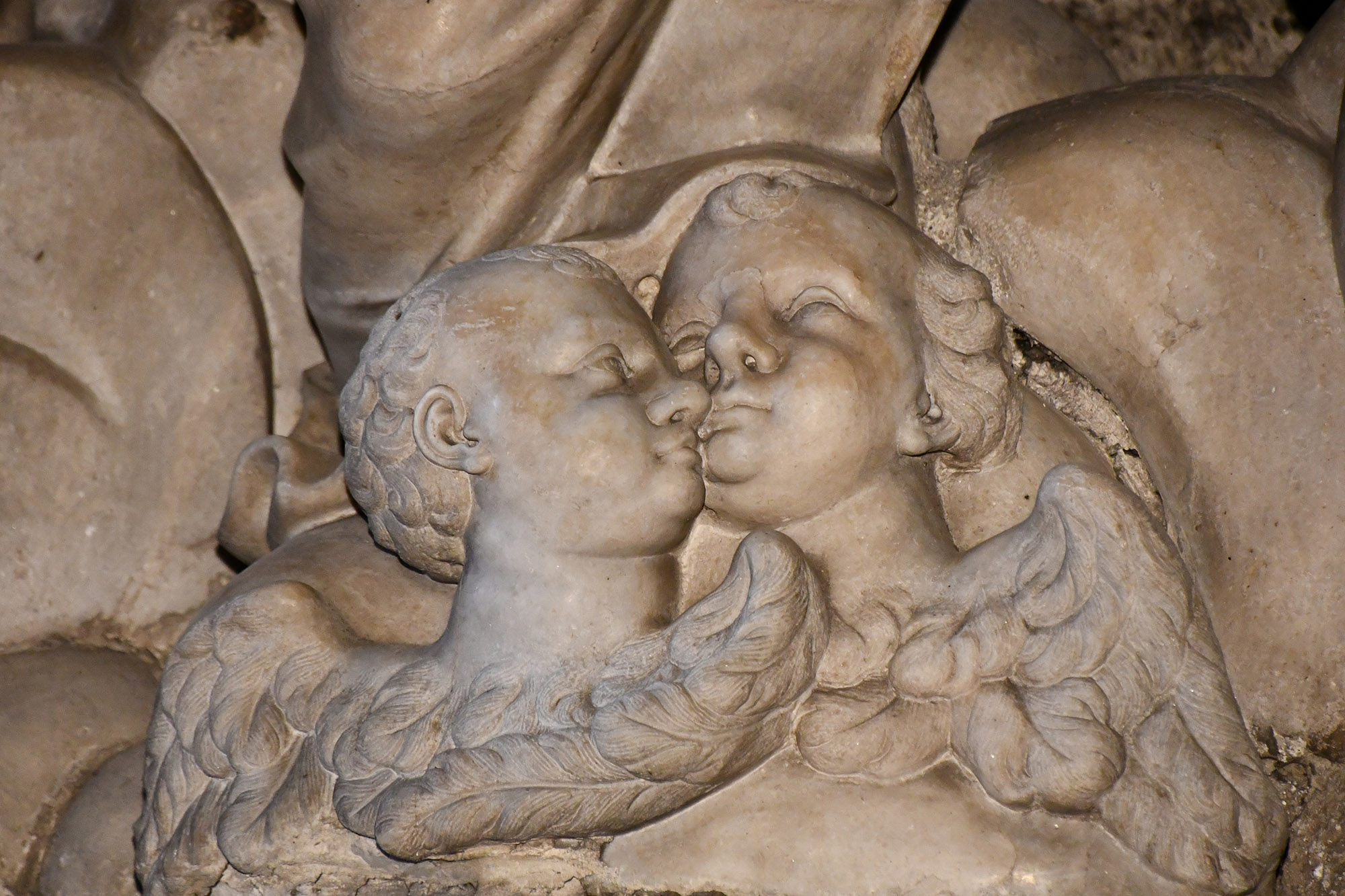
The Altar of the Assumption of Mary was erected in the autumn of 1721 at the initiative and with the financial support of Jesuit Father Inocenc Erber.
The statues of St. Joachim and St. Anne, as well as the two angels on the attic, were created by Jacopo Contieri.
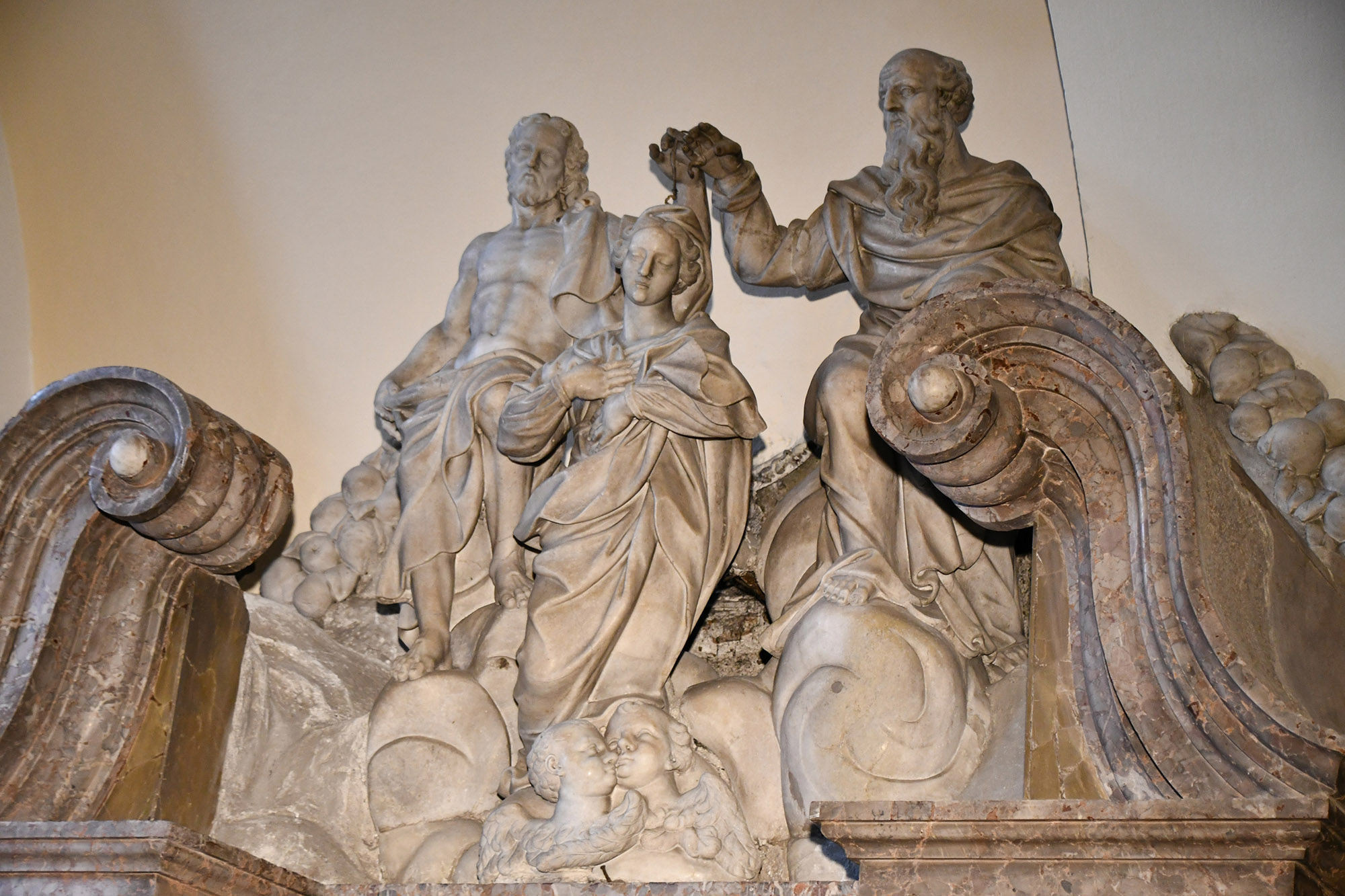
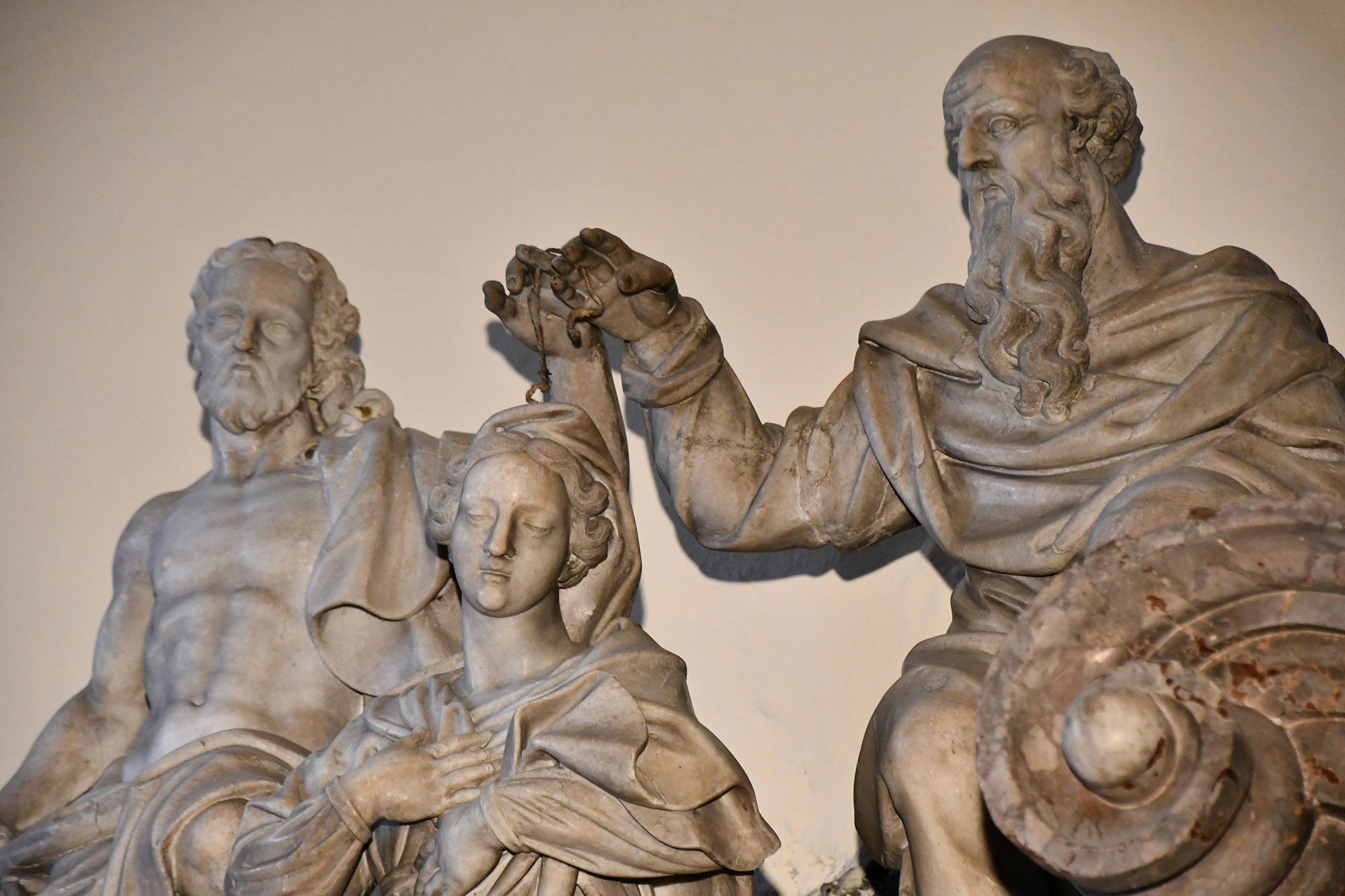
The sculptural group of the Coronation of Mary is considered the earliest work in Ljubljana by Francesco Robba.
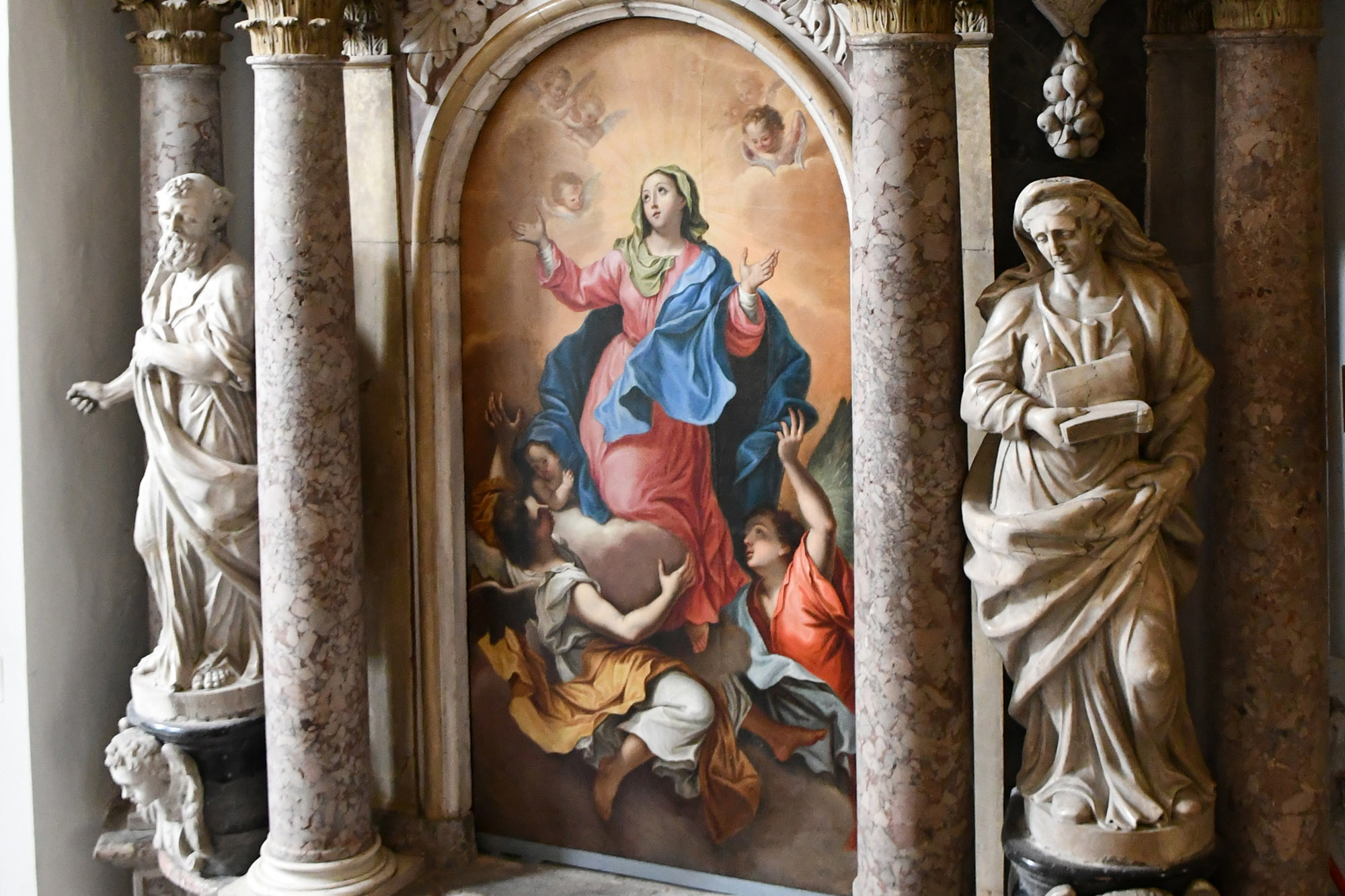
The altarpiece The Assumption of Mary, painted by Matevž Langus in 1822, depicts Mary surrounded by angels without the apostles, reflecting one of two traditional iconographic interpretations of this mysterious event.
The Altar of the Assumption of the Virgin Mary was constructed in the autumn of 1721, initiated and financially supported by Jesuit Father Innocenz Erber. The old altar was dismantled on 9 September; three days later, the marshy ground was reinforced with alder piles, followed by the construction of the foundations and the altar table. By 15 November, the anniversary of the church’s dedication, the new altar was fully completed.
Its architectural design reflects a calm Baroque composition in light pink marble, with pairs of columns flanking the altar niche. Beside it stand full-length statues of Saints Joachim and Anne, the parents of Mary, whose feast day is celebrated on 26 July. The statues were carved in 1720 by Venetian sculptor Jacopo Contieri, who signed his name as I.C.S. on the base of Joachim’s statue and IACO.S CONTIERUS SCVL. on Anne’s. Also by Contieri are the two angels standing at the edges of the attic, holding a scroll with the inscription ASSUMPTA EST MARIA / GAUDENT ANGELI (“Mary has been assumed / The angels rejoice”).
The sculptural group of the Coronation of the Virgin Mary in the attic is believed to be the earliest work in Ljubljana by Francesco Robba. He arrived in the city as Contieri’s assistant and later became the leading Baroque sculptor in the region.
The central niche is filled with the painting Assumption of the Virgin, signed and dated 1822 by Matevž Langus. Though signed, the painting is not typical of Langus’s style, and it is likely a copy of an earlier image once venerated by all three Jesuit Marian confraternities. The composition follows the second iconographic tradition of the Assumption, known as the Assumed Virgin, which depicts Mary alone surrounded by angels, without the apostles or the empty tomb. This version reflects post-Tridentine theological concerns about whether the apostles were actual witnesses of the Assumption.
This post is also available in DE, ES, FR, SI, IT, PL and SI.