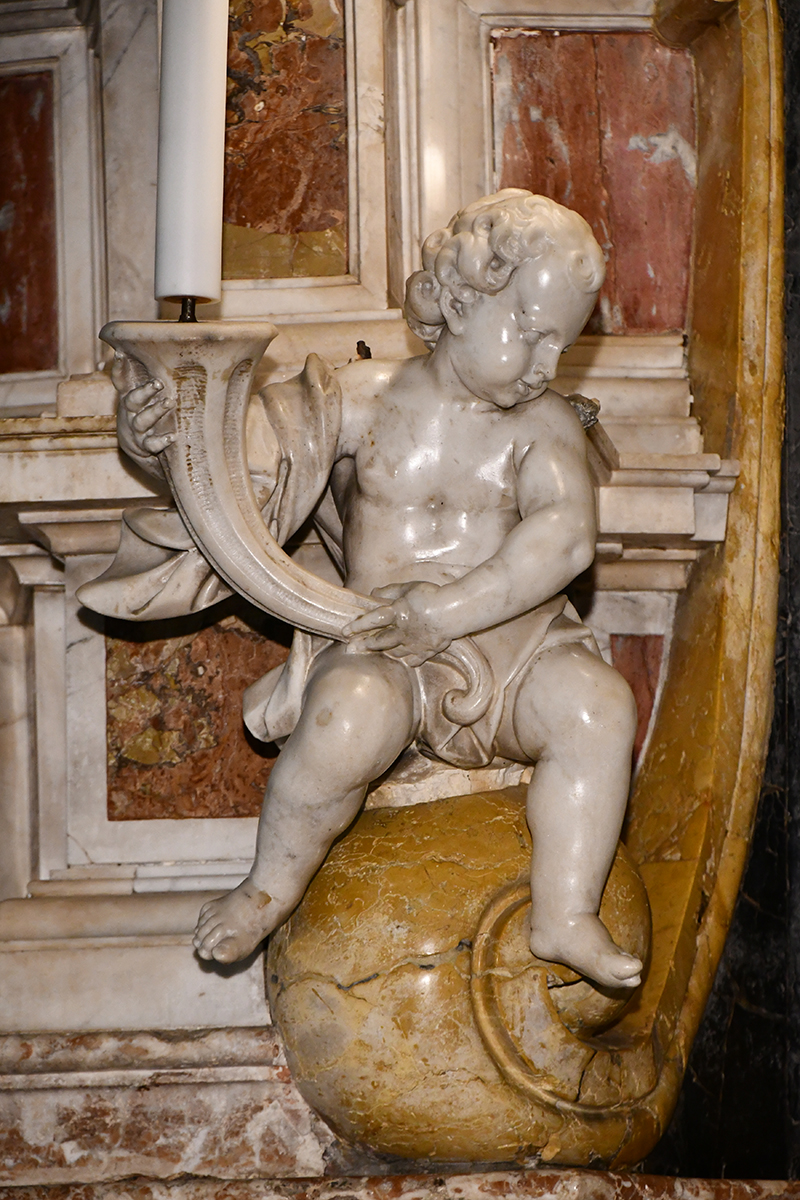
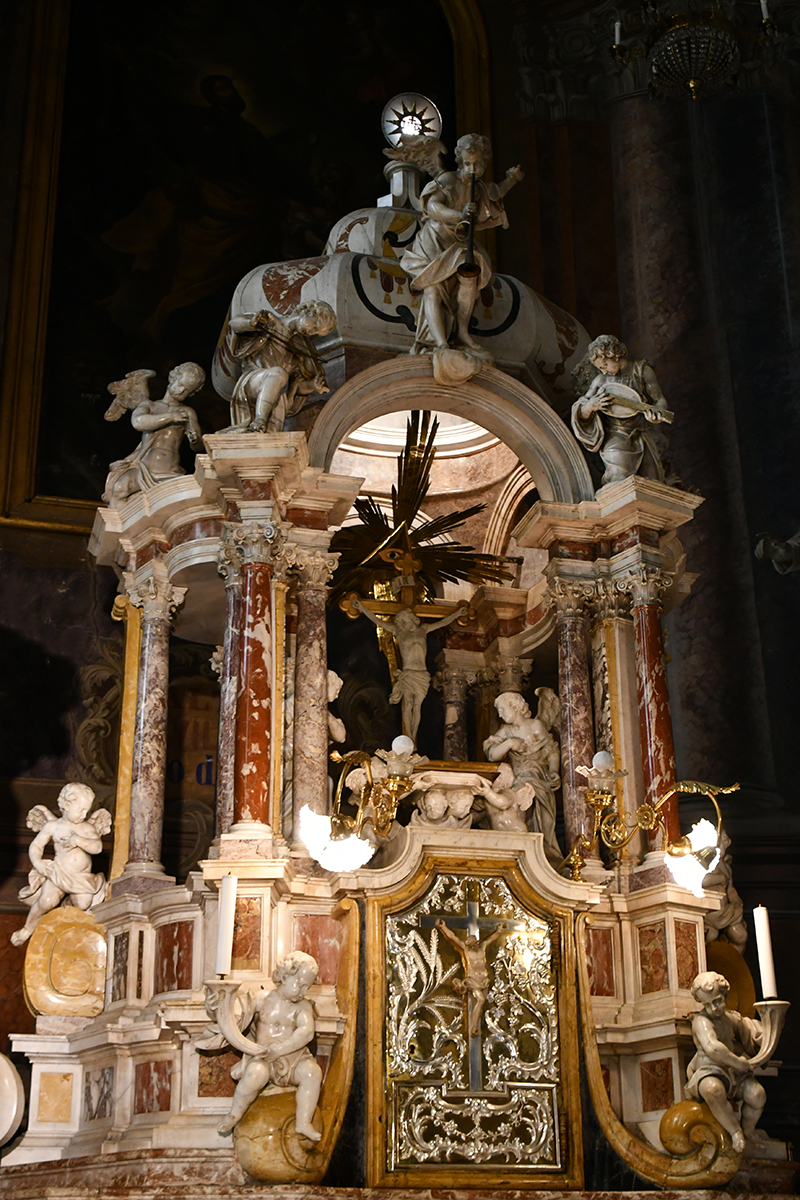
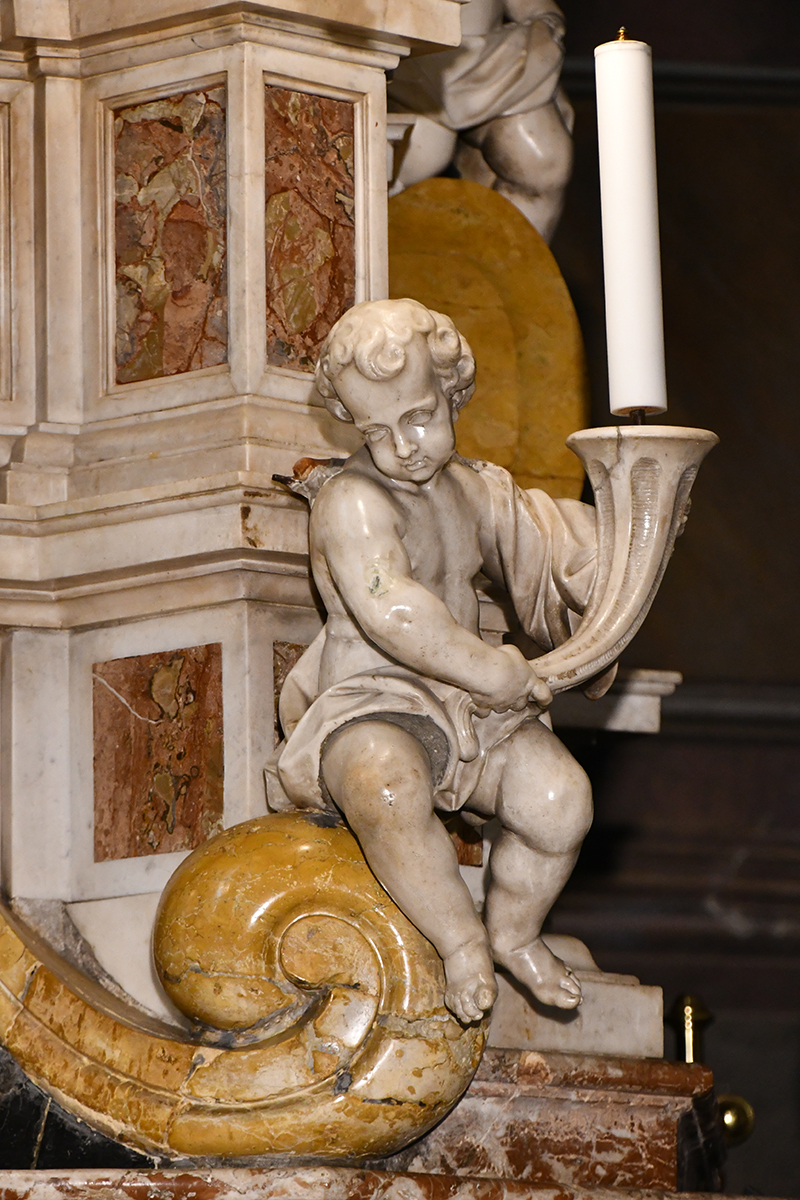
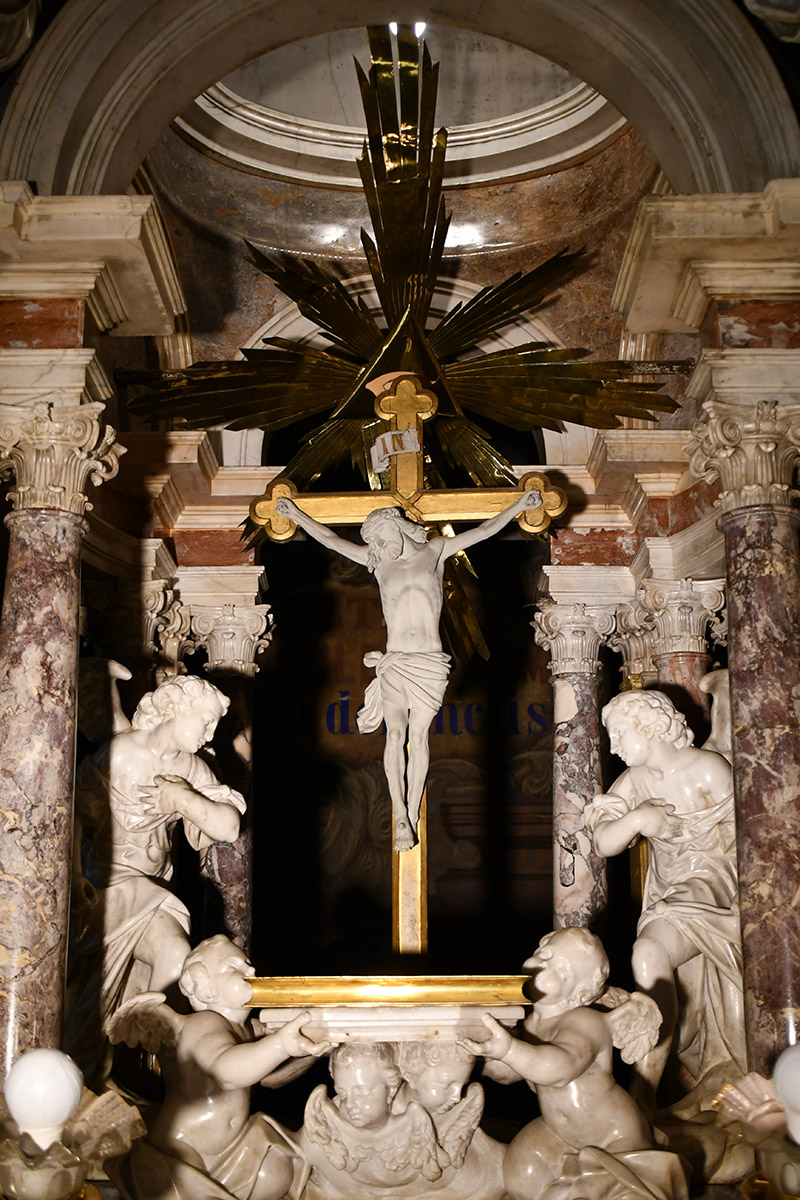
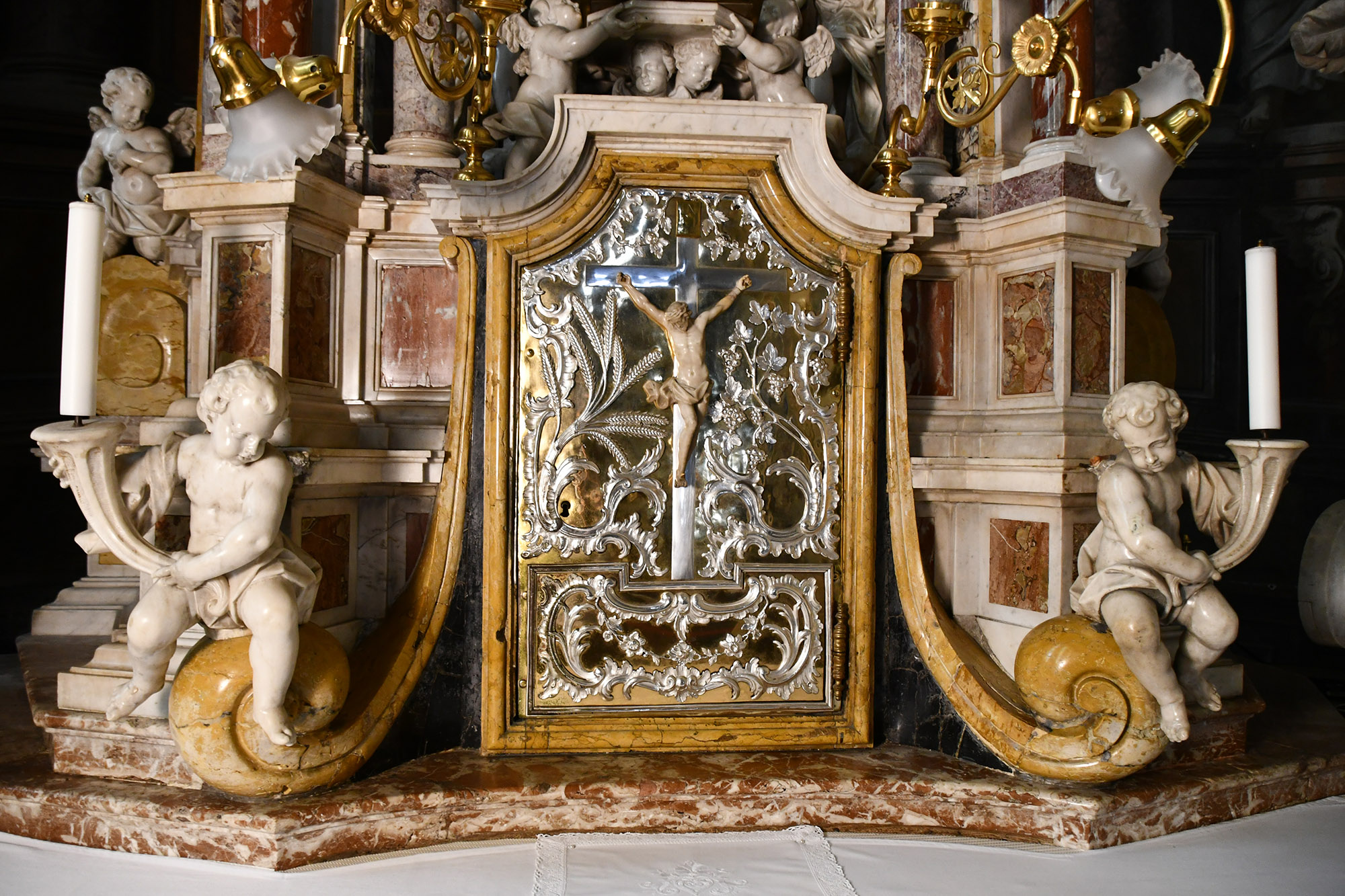
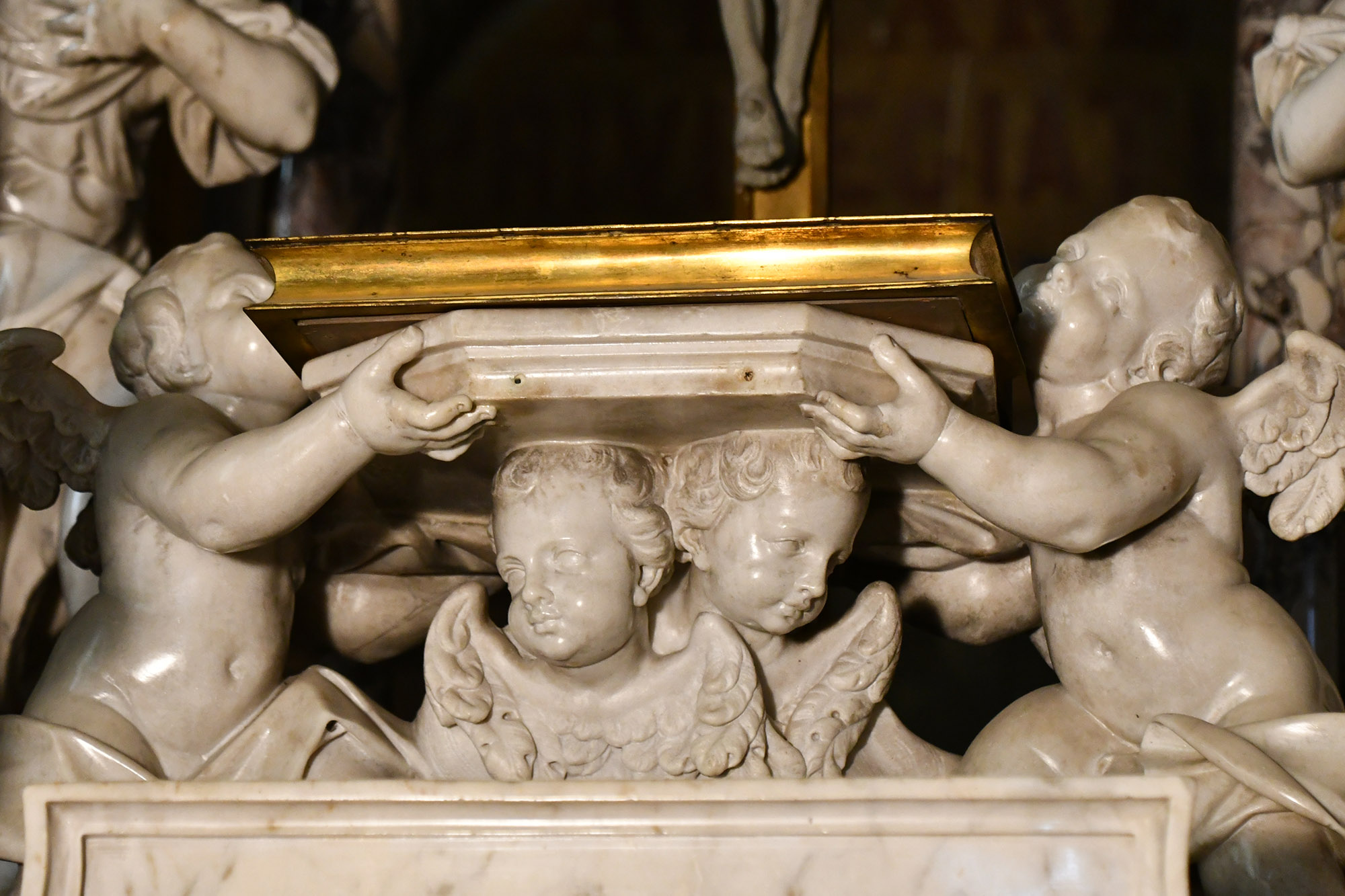
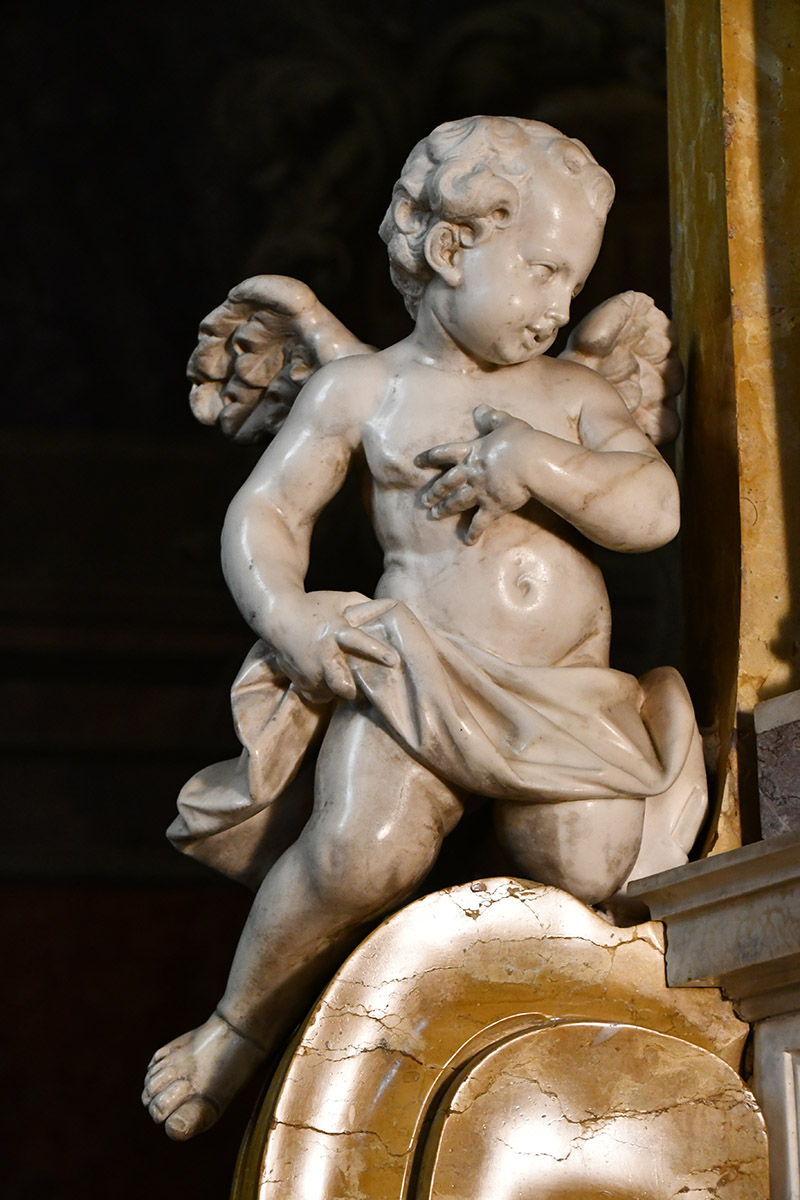
The main altar of St. James Church in Ljubljana, created between 1728 and 1732, ranks among the most significant masterpieces by Venetian sculptor Francesco Robba (1698–1757), a central artistic figure of Ljubljana’s Baroque period. Robba’s exceptional marble craftsmanship gained him widespread acclaim and numerous commissions across Carniola, Carinthia, and Croatia.
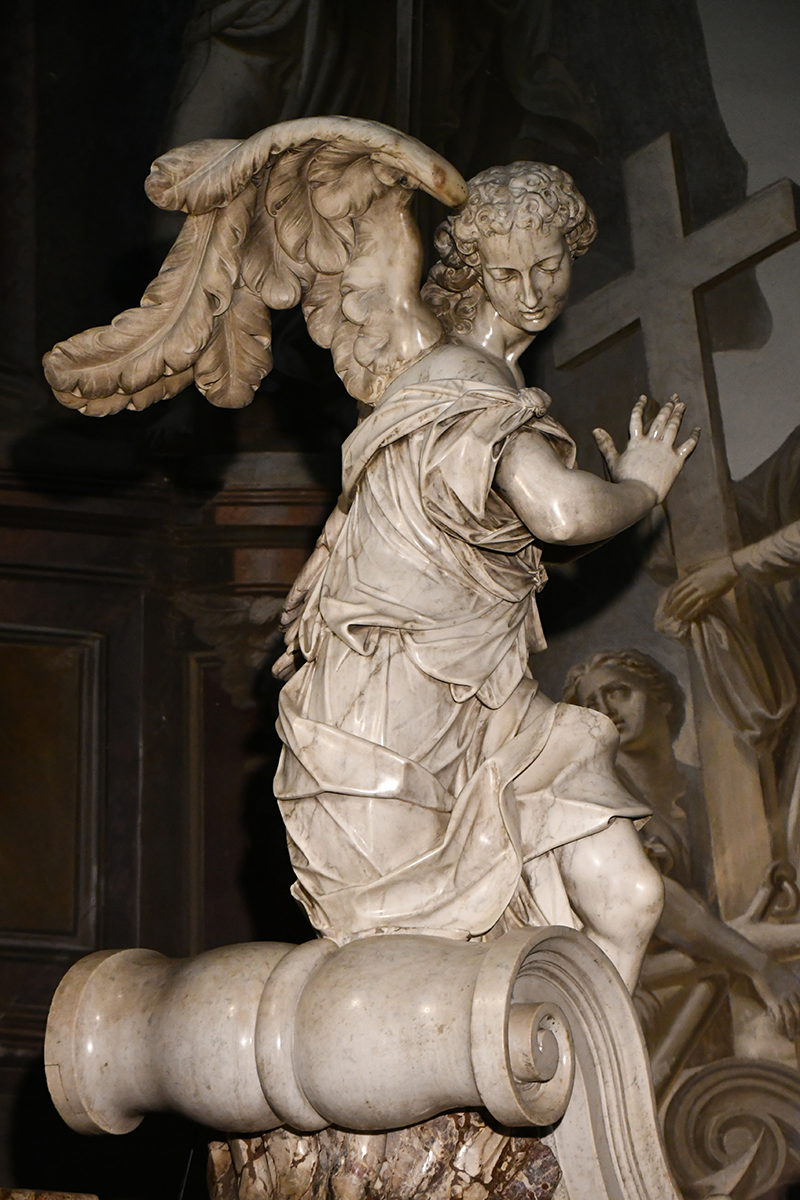
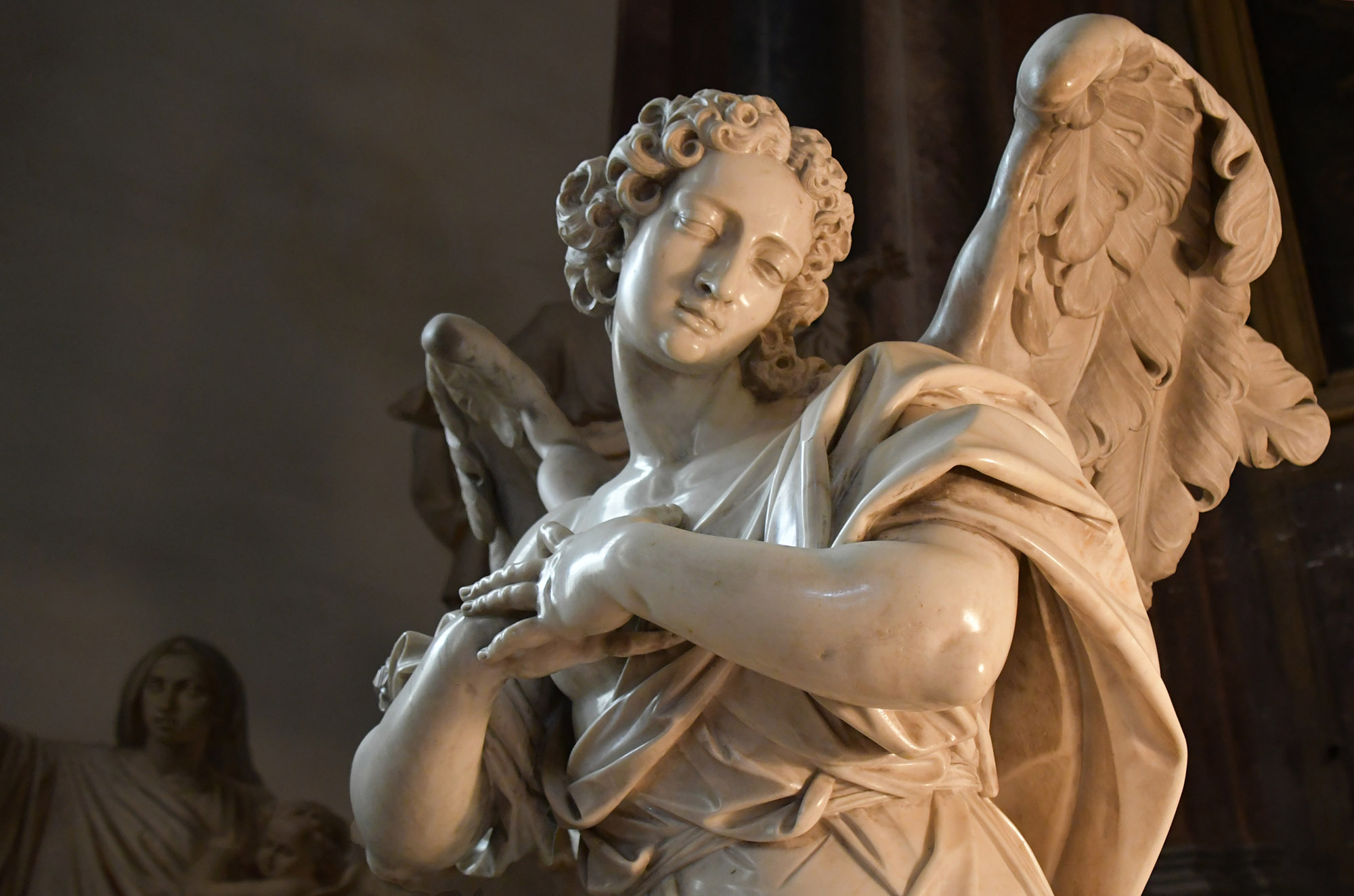
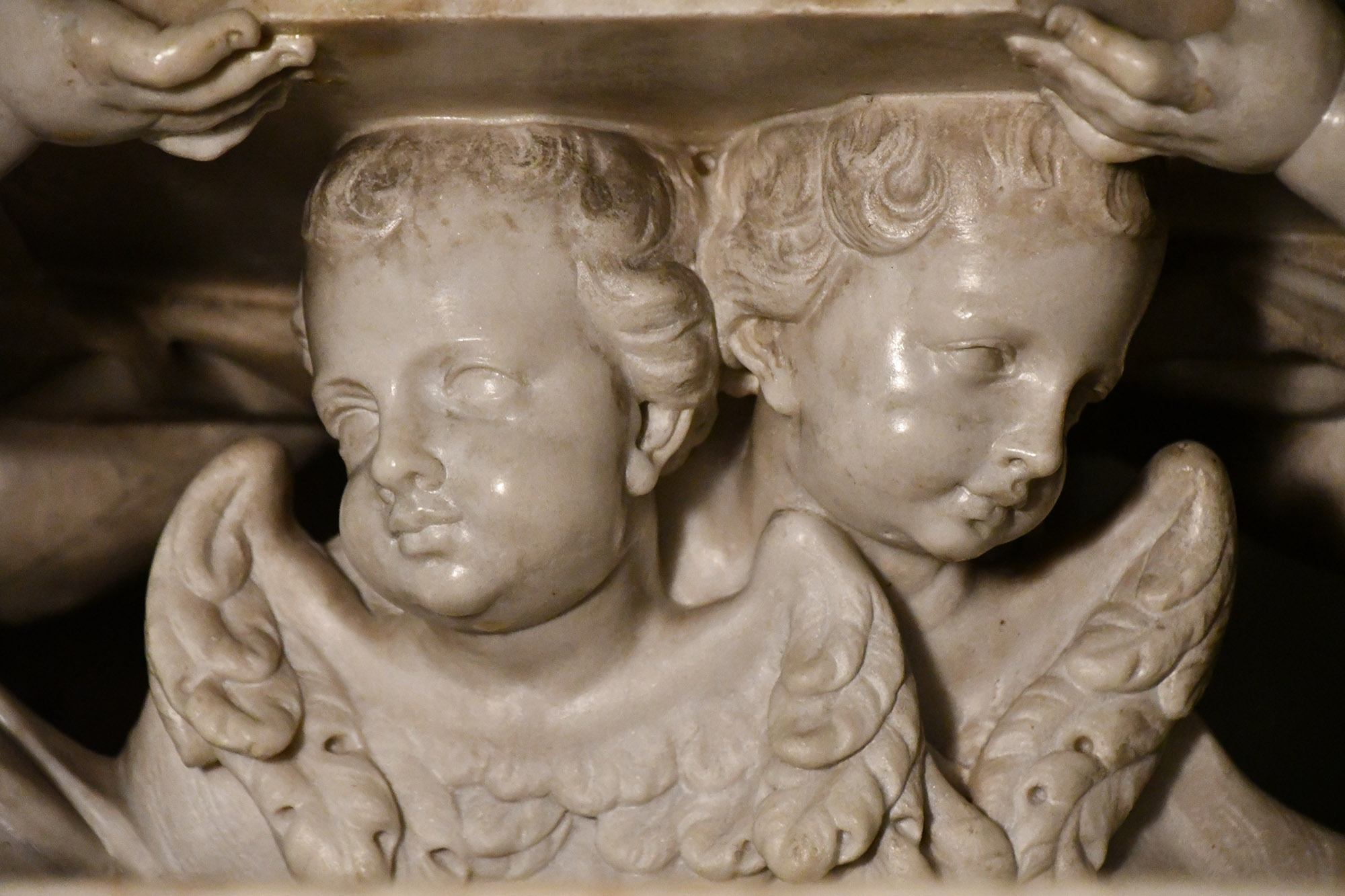
Robba’s altar in St. James Church is designed as a tabernacle structure, notable for its intricate composition and luxurious use of colored marble. It features seventeen impressive sculptures carved from high-quality Carrara marble. Particularly striking are two monumental adoring angels positioned on the altar sides. Their delicately spread wings and respectfully bowed heads give the impression of a gentle descent to honor the Blessed Sacrament within the tabernacle. Their posture, with hands clasped in prayerful contemplation, poignantly expresses deep spiritual devotion.
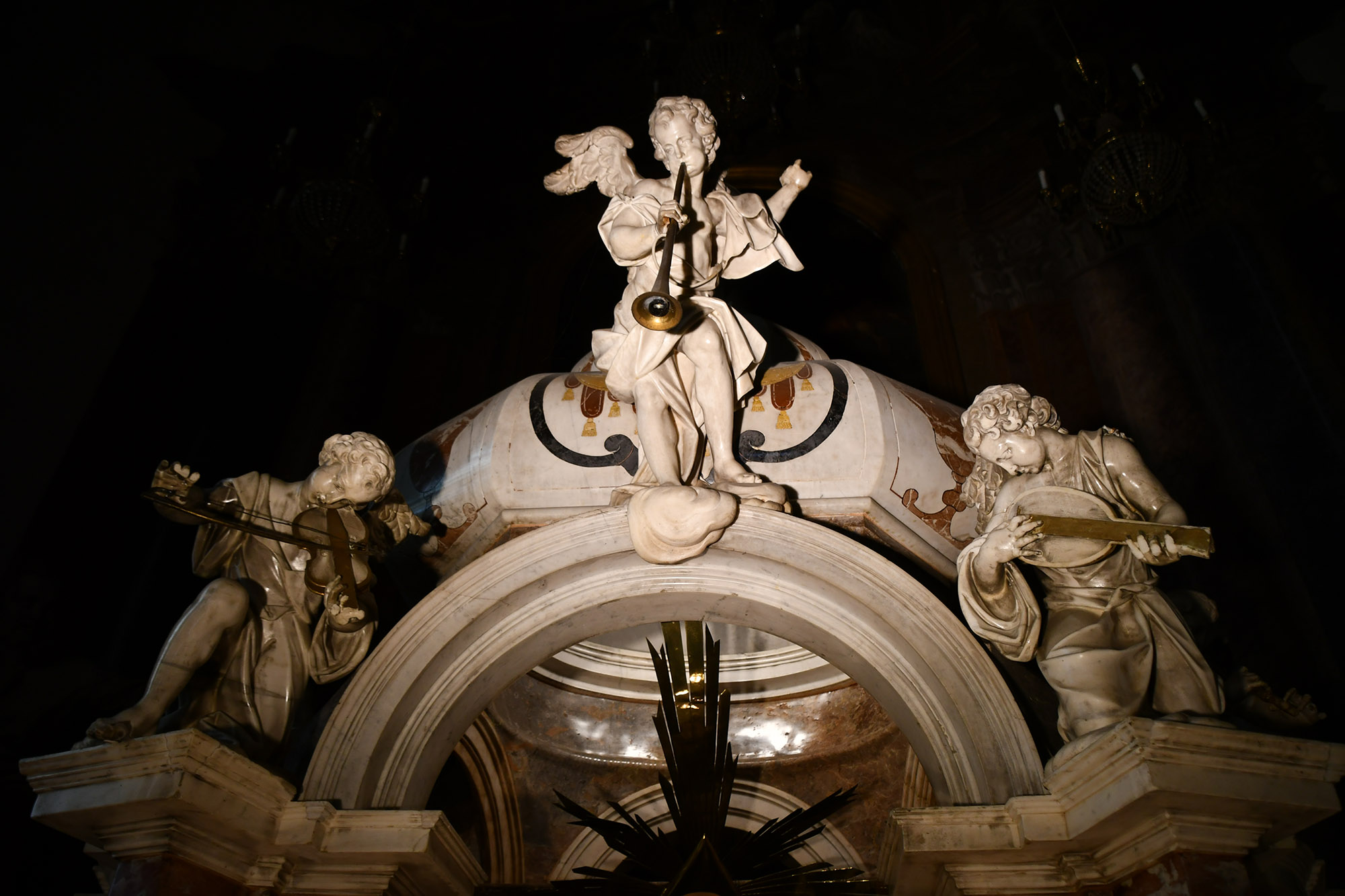
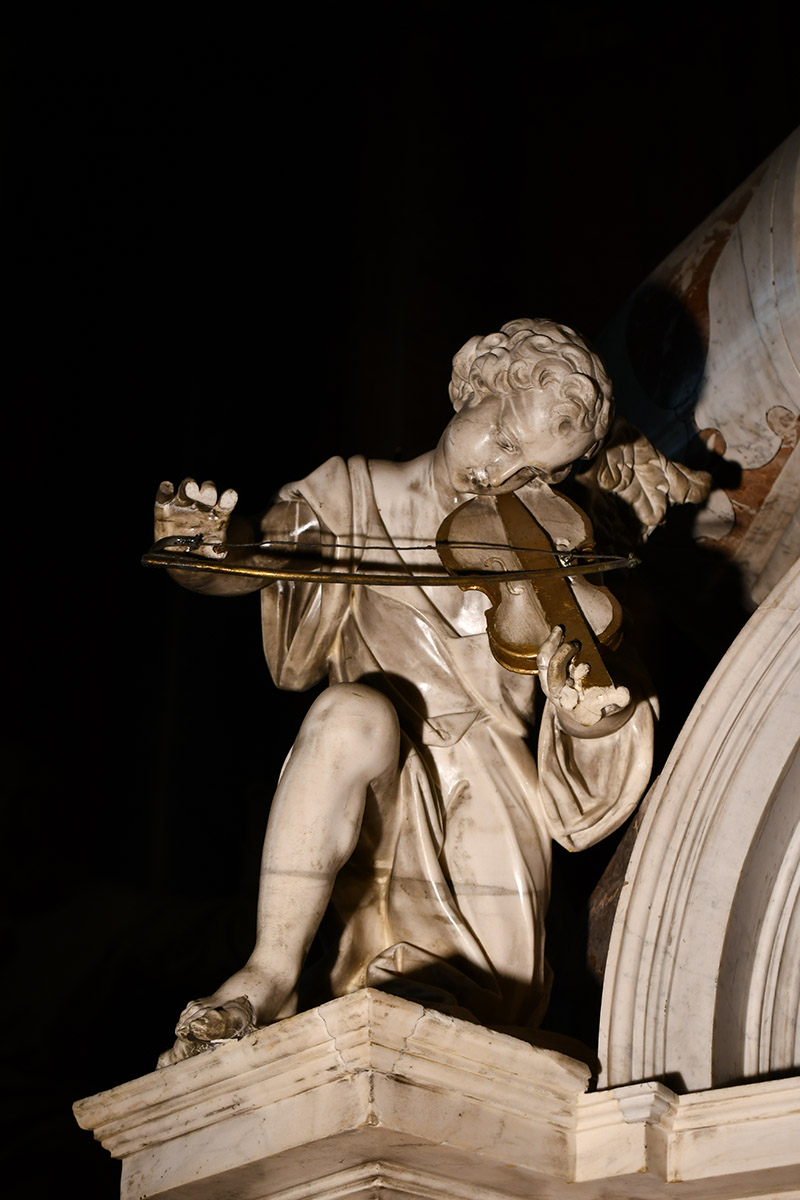
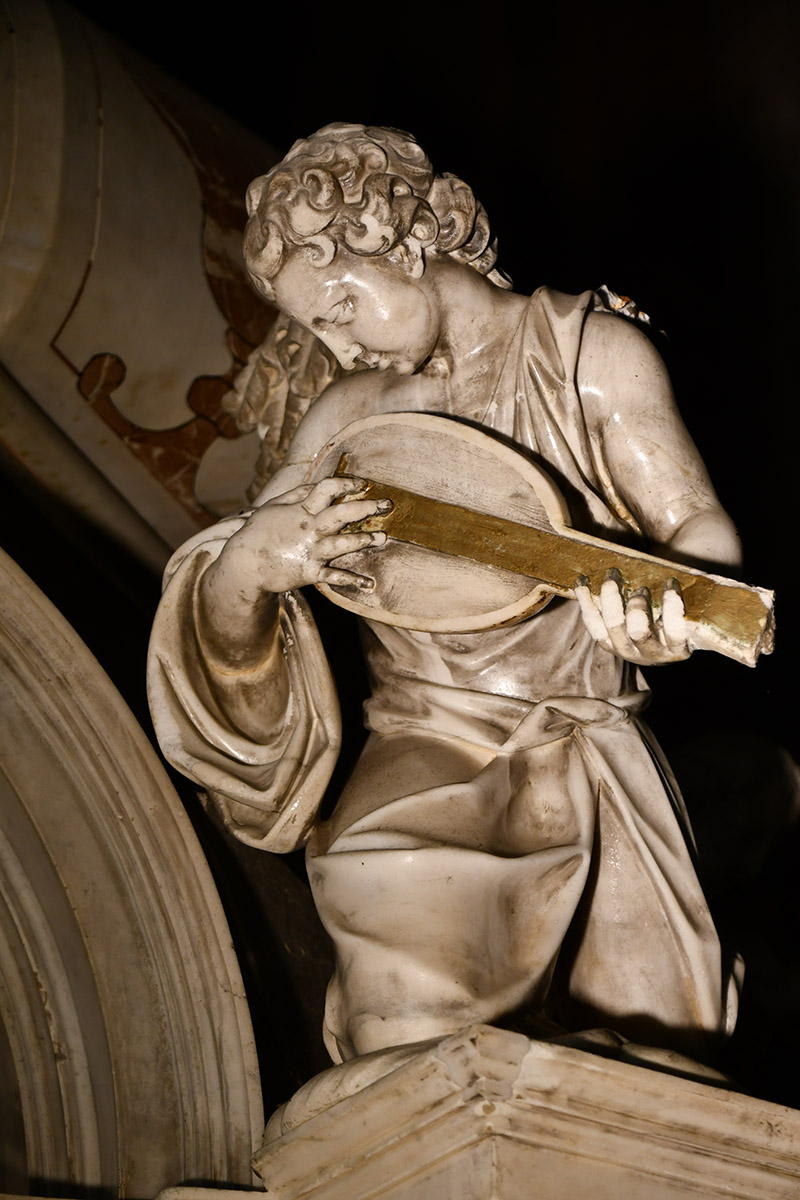
The tabernacle is richly adorned, topped by an ensemble of angel musicians playing various instruments. Among them are five musical putti: two at the front playing violin and lute, two behind playing cornets, and one angel at the top playing a trombone, symbolically offering continual praise to God.
Although originally planned as a grand marble structure, the altar’s full architectural framework was never realized. When unveiled on July 25, 1732, Ljubljana’s citizens flocked to admire it. Temporarily, the altar structure was depicted through an illusionistic fresco likely painted by Franc Jelovšek, representing Saints Peter, John the Evangelist, Paul, Jude Thaddaeus, and the Assumption of Mary. After a fire damaged the fresco, it was restored and refreshed by Matevž Langus in 1828. In 1869, it was replaced by a new fresco by Wolf, modeled after Pozzo’s altar in Rome’s Il Gesù.
The altarpiece, depicting St. James as a pilgrim, was painted in 1728 by Johann Karl Auerbach and obtained from Vienna after multiple losses due to fires. The painting shows St. James gazing towards the palm of martyrdom brought by descending angels, highlighting his spiritual yearning and sacrifice.
Robba’s altar, despite not being fully executed according to its ambitious original plan, remains the most treasured artistic highlight of St. James Church. Its sculptural refinement, devotional intensity, and artistic excellence represent a pinnacle of Baroque art in Slovenia.