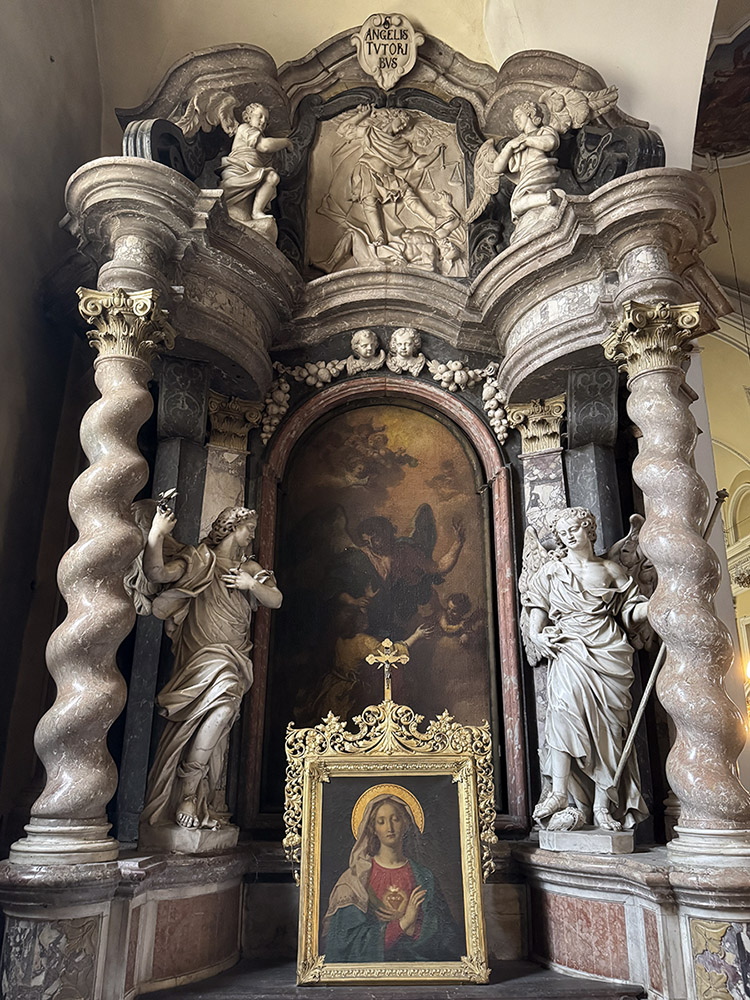
The Altar of the Guardian Angels was erected in 1723, funded by Jesuit Father Jožef Wiviz and bell-ringer Gašper Franchi.
The statues of Archangels Gabriel, Raphael, and Michael, along with two kneeling angels, were sculpted by Francesco Robba – his first known work in a Jesuit church.
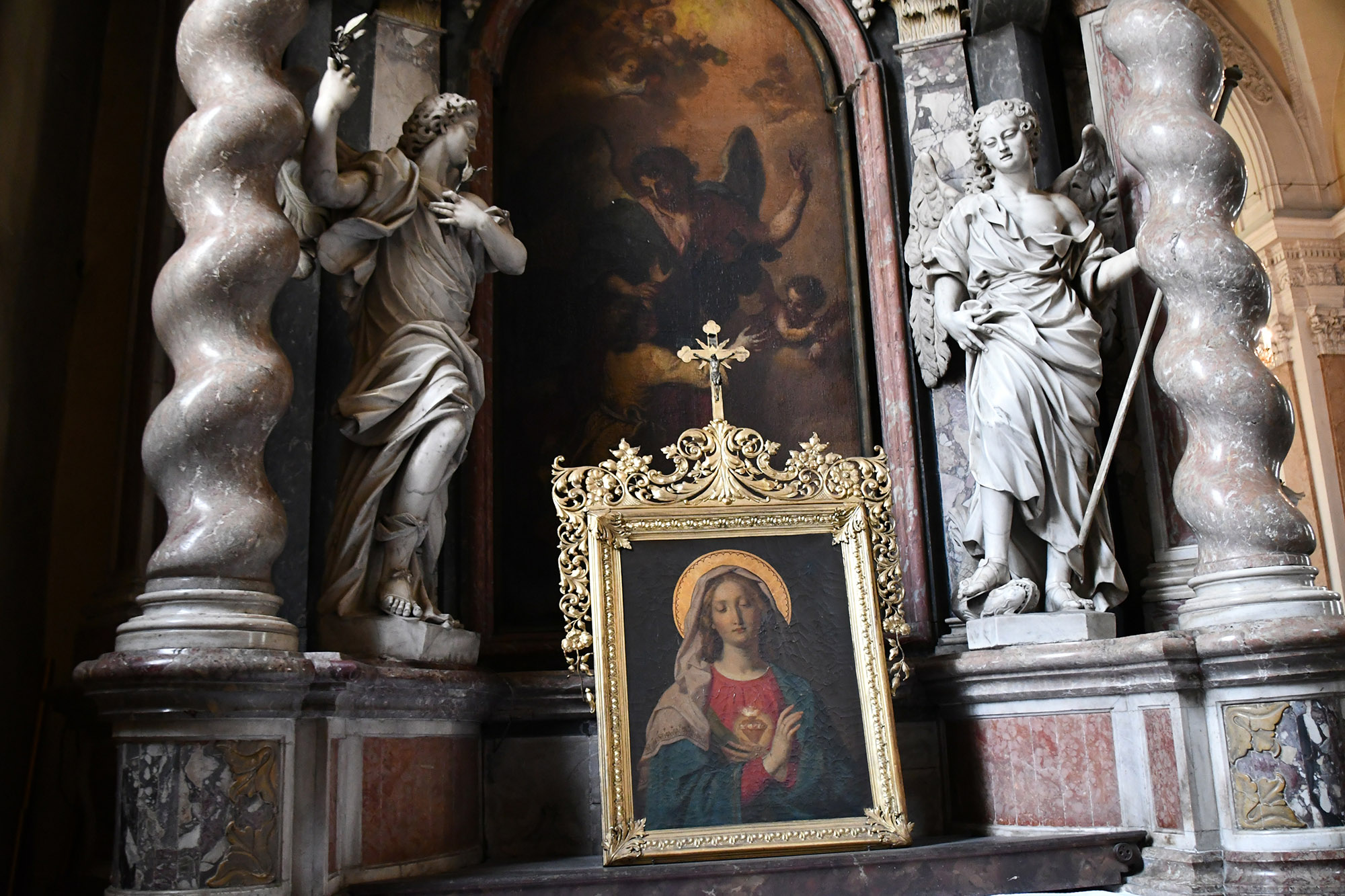
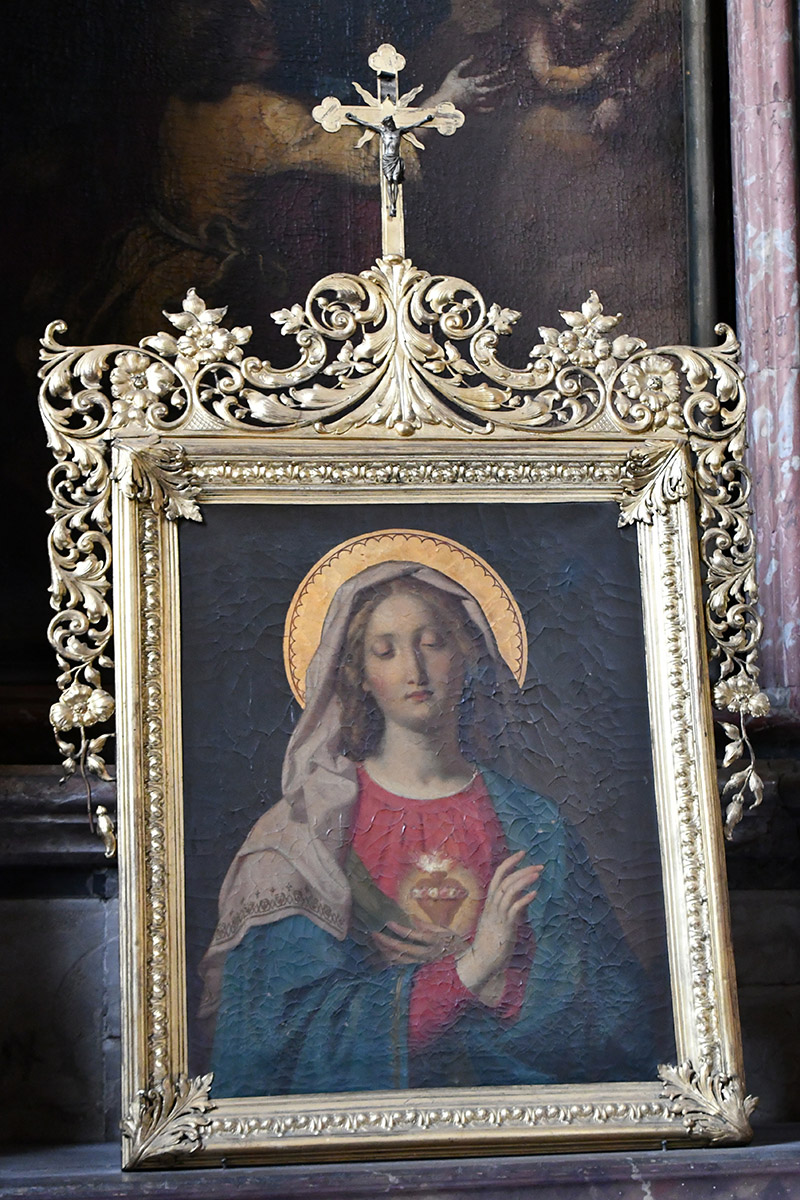
The central altarpiece of the Guardian Angel was painted by Bartolomeo Liberi in 1732, while the painting of the Immaculate Heart of Mary on the mensa is the work of Josef Plank from 1860.
The altar held special significance for Jesuit students as a place of devotion and trust in angelic protection.
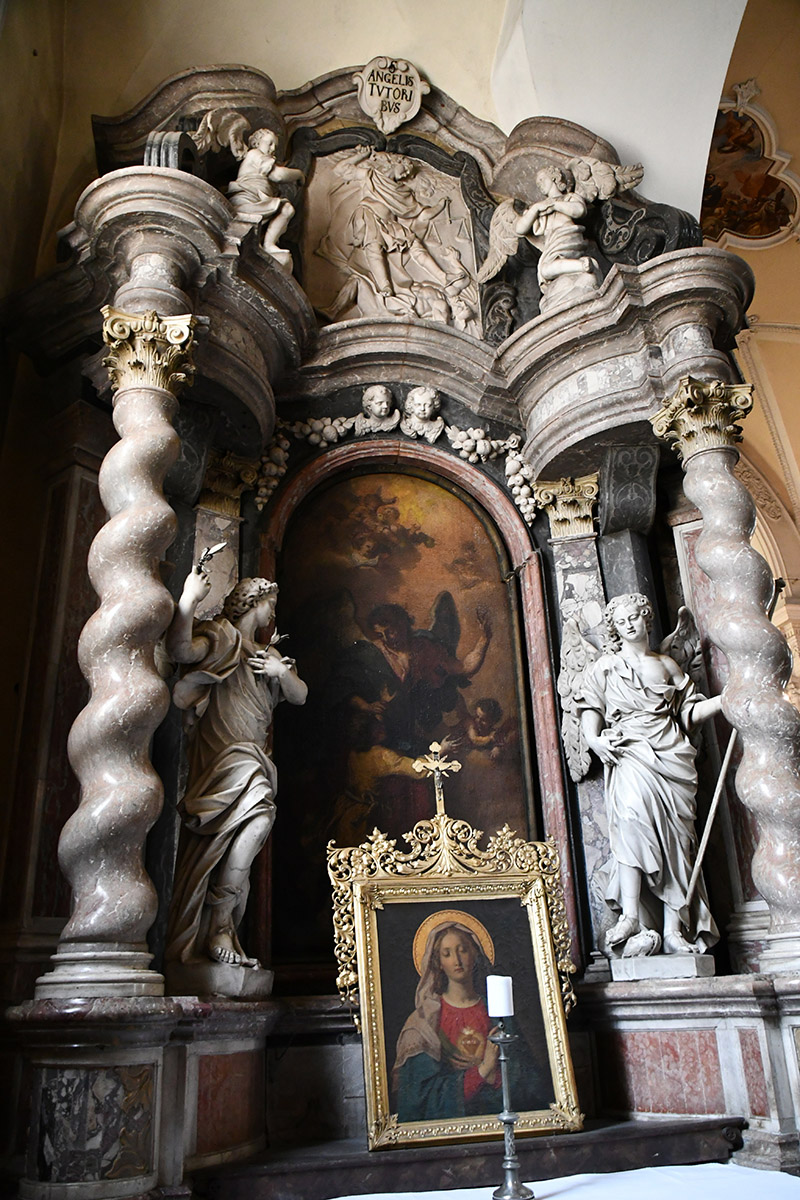
The Altar of the Guardian Angels was erected between June 22 and July 30, 1723. The cost of 1,500 gold coins was covered by Jesuit Father Jožef Wiviz and bell-ringer Gašper Franchi. Designed as a counterpart to the Altar of St. Joseph, it is among the most representative Baroque altars in the church. Its form reflects the influence of the Venetian school, which strongly shaped sacred art in Ljubljana in the 18th century.
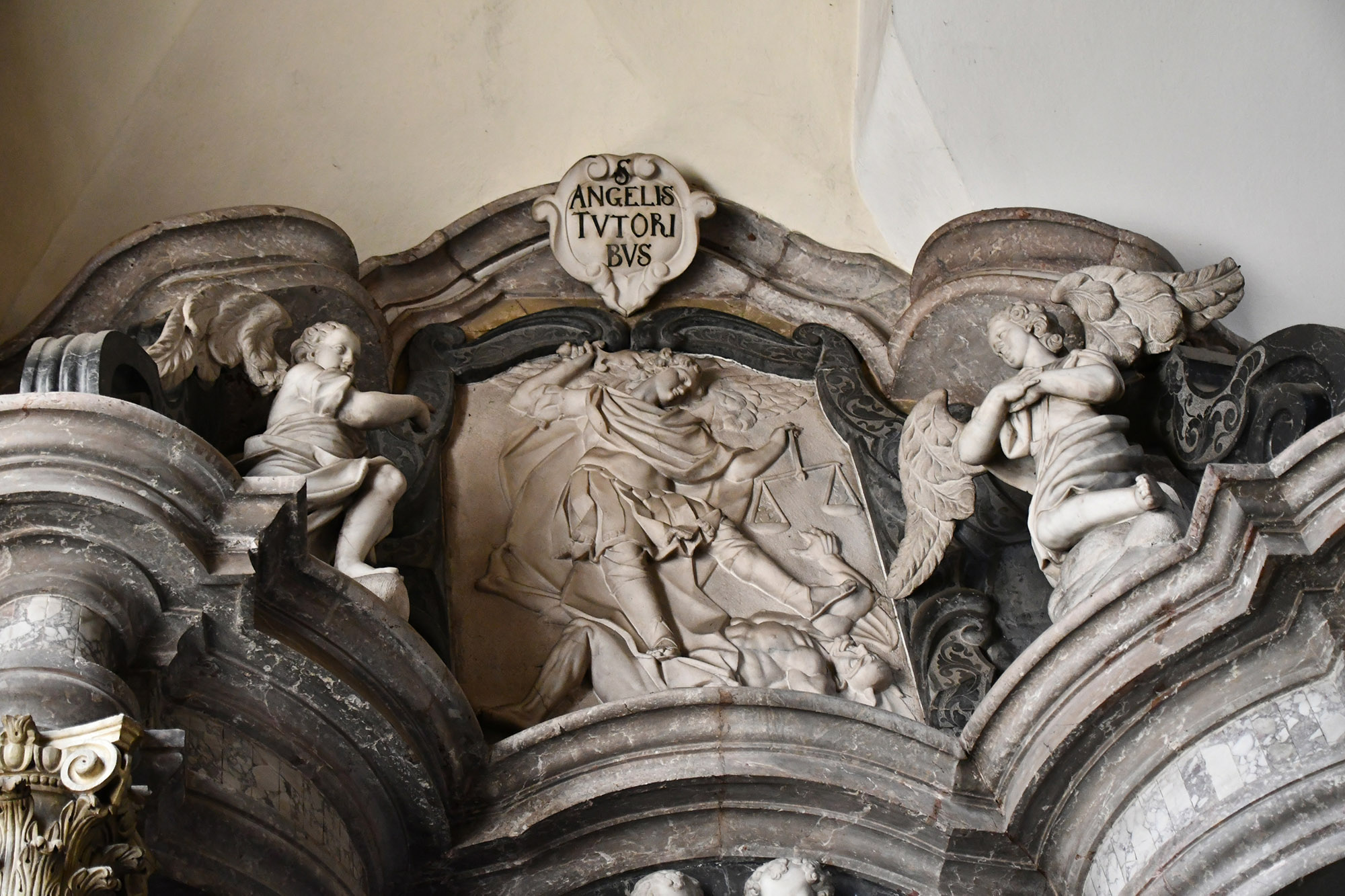
Above the protruding mensa with balustrade rises a dynamic altar structure. On undulating pedestals stand two twisted columns positioned in the foreground to emphasize spatial depth. Next to them are the statues of Archangels Gabriel (left) and Raphael (right), flanked above by two kneeling angels on the attic. At the top is a relief of Archangel Michael with a sword and scales, shown defeating Satan. All the sculptures were carved in 1723 by Francesco Robba, marking his first known work in a Jesuit church in Ljubljana. His figures already reflect classical refinement, though still framed by a lively Baroque composition.
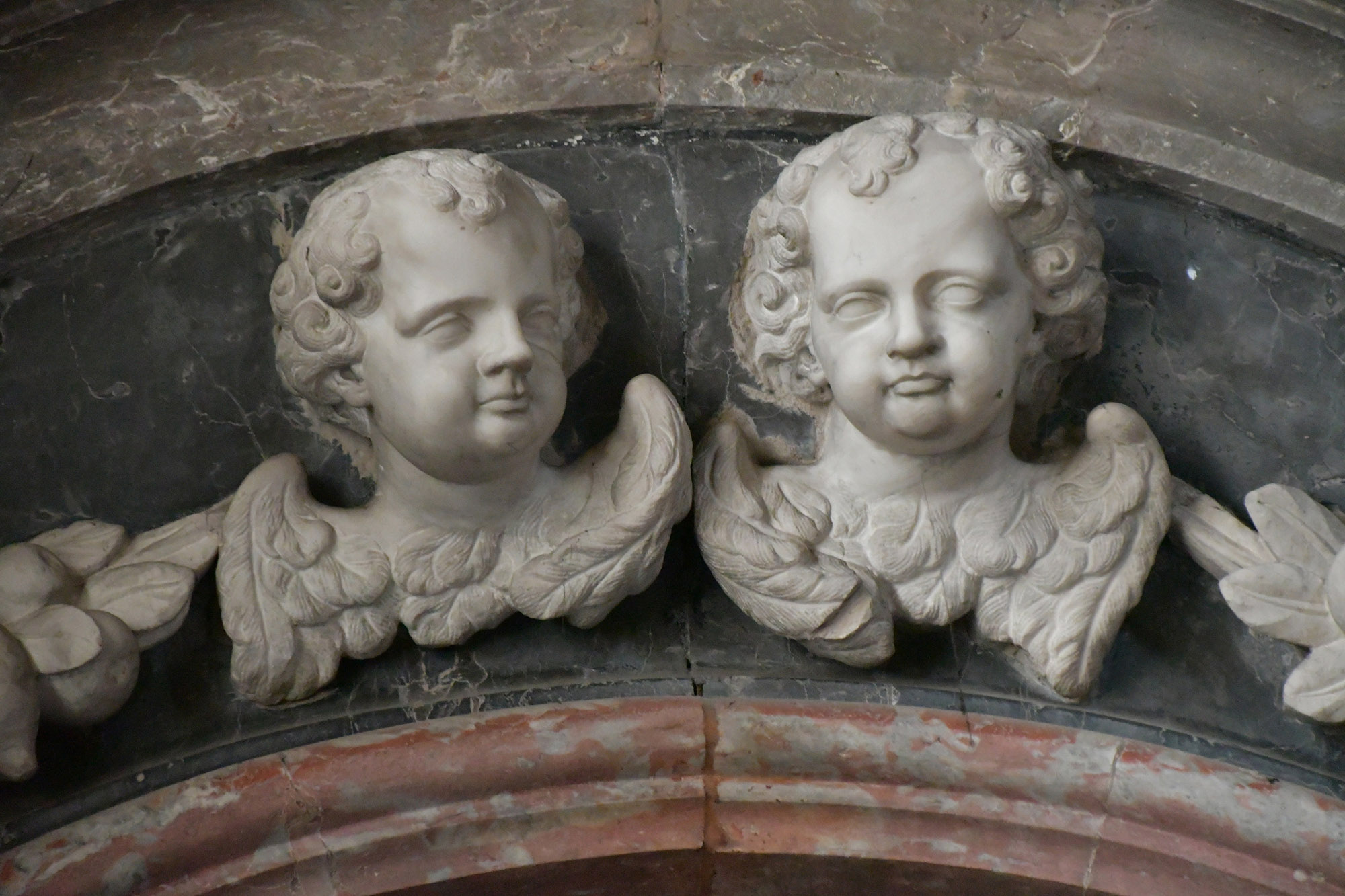
The central altarpiece depicts a Guardian Angel and was painted in 1732 by Bartolomeo Liberi, a Venetian master. His warm color palette and soft light harmonize with the sculptural elements. On the mensa stands a painting of the Immaculate Heart of Mary by Josef Plank (1860), while beneath the mensa is a cartouche with a relief of the Virgin Mary surrounded by angel heads—likely the work of Robba’s apprentice.
The altar highlights the roles of three archangels: Gabriel, God’s messenger, typically depicted with a lily; Raphael, the healer and guide, shown with a pilgrim’s staff and a fish; and Michael, the warrior and protector of souls, portrayed in armor in victory over evil.
Guardian Angels were special patrons of second-year students (principisti) at the Jesuit school. Before the altar was built, their feast day was celebrated at the main altar. After 1723, this richly crafted altar became the central place of devotion to the protective presence of angels, uniting artistic mastery and spiritual comfort.
This post is also available in DE, ES, FR, SI, IT, PL and SI.