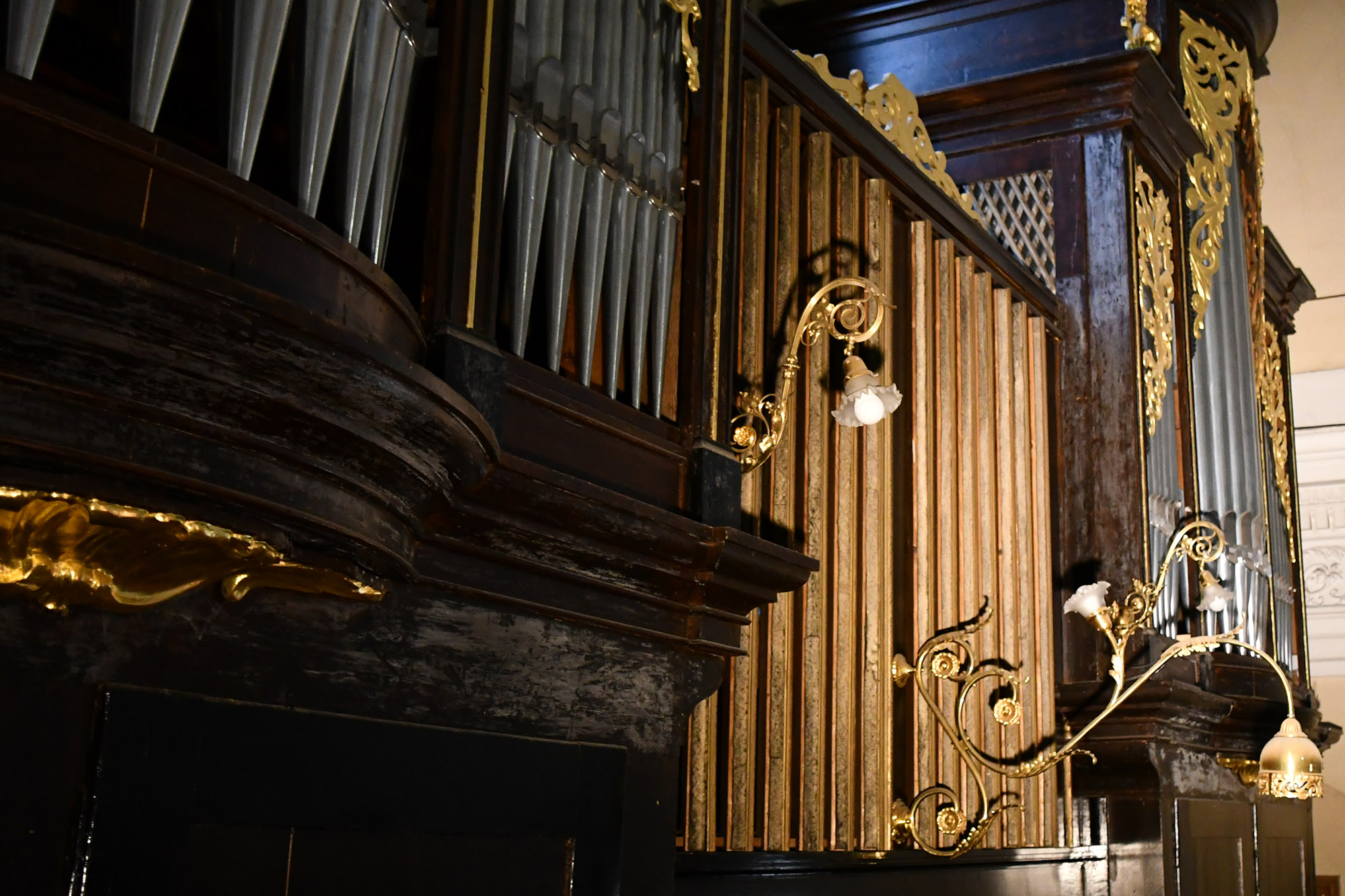
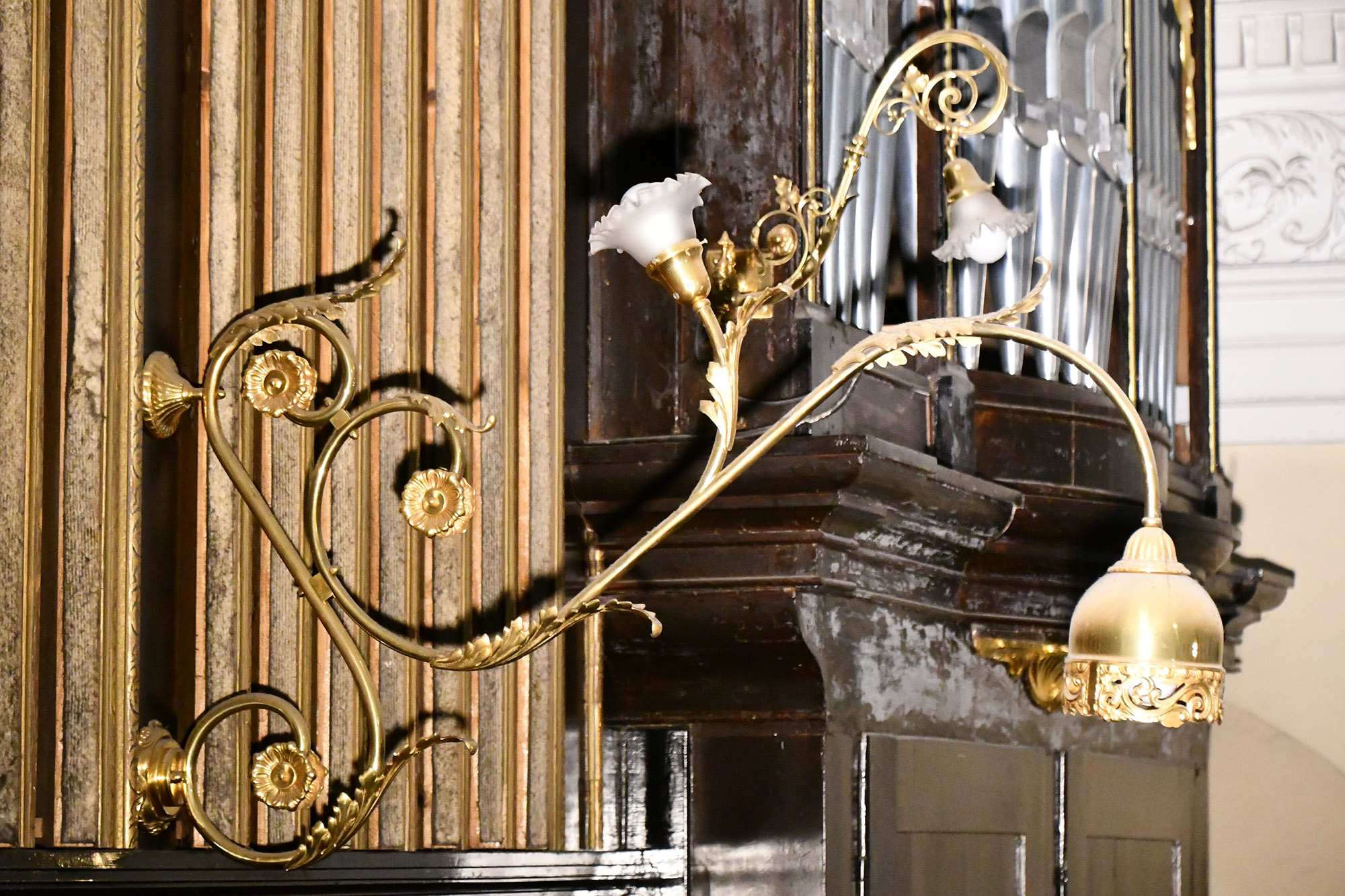
The organ of St. James’s Church in Ljubljana has a long and rich history. First mentioned in 1600, the current instrument was built by Franc Goršič in 1883 with 22 stops. In 1960, it was expanded by Franc Jenko, who added a third manual and increased the number of stops to 42. The most recent restoration took place between 2013 and 2014 under the direction of Brane Košir, who preserved the historical voicing and restored the pipes and bellows. Today, the organ is considered one of the most important sacred instruments in Ljubljana and plays a vital role in the church’s liturgical and concert life.


The first organ in St. James’s Church is mentioned as early as the year 1600, at a time when the old church, likely built by Augustinian monks in 1513, was still standing. After the arrival of the Jesuits in 1597, the old church was demolished and replaced by a new one, completed in 1615. Just a year later, Baron Markvard Erberg, a commander of the Teutonic Order, donated a new organ to the church, valued at 200 gold ducats. A local chronicler described it as “shining like gold.” In 1674, a new instrument was built but destroyed around 1700, followed by further donations of organs in the decades to come.
Around 1728, a special organ was built, probably by the organ builder Else. This instrument remained in use until 1831, when it was rebuilt by Josef Ferdinand Malitschky. In 1837, it was further modified by the renowned Ljubljana organ builder Franc Goršič (1836–1898), who in 1857 sent the instrument to the Walcker workshop in Ludwigsburg, Germany, for another restoration. The new plan envisaged three manuals with 45 stops and a pedalboard, and the builder committed to completing the work within one month.
In 1883, the church received an entirely new organ built by Franc Goršič, whose work marked a significant step in the development of Slovenian organ art. He installed 22 speaking stops into a newly crafted organ case, with two manuals and a pedalboard, while preserving several older stops from the mid-19th century. Goršič refined the windchest system, achieving a high level of technical sophistication and artistic expression. His work harmonized tradition and innovation, making the instrument a piece of exceptional historical and musical value. The organ was installed during a period of comprehensive artistic renovation of the church under Pastor Janez Rozman.
In the following decades, the organ required several repairs. A restoration was already planned in 1915, but it was cancelled due to the war. In 1960, the organ was thoroughly rebuilt by master organ builder Franc Jenko, who expanded the instrument to 42 stops (36 of which were speaking), added a third manual, and incorporated the new mechanism into the historical organ case. This version featured a pneumatic action, but its tonal quality and suitability for the church’s acoustics remained unsatisfactory.
The most recent major restoration took place between 2013 and 2014, led by organ builder Brane Košir. Special care was taken to preserve the historical voicing, restore the bellows, and clean and tune the metal pipes.
Today, Goršič’s organ—enlarged and restored over the centuries—stands as one of the most important sacred instruments in Ljubljana. It enriches the liturgical, concert, and artistic life of St. James’s Church and testifies to the rich heritage of Slovenian organ building.