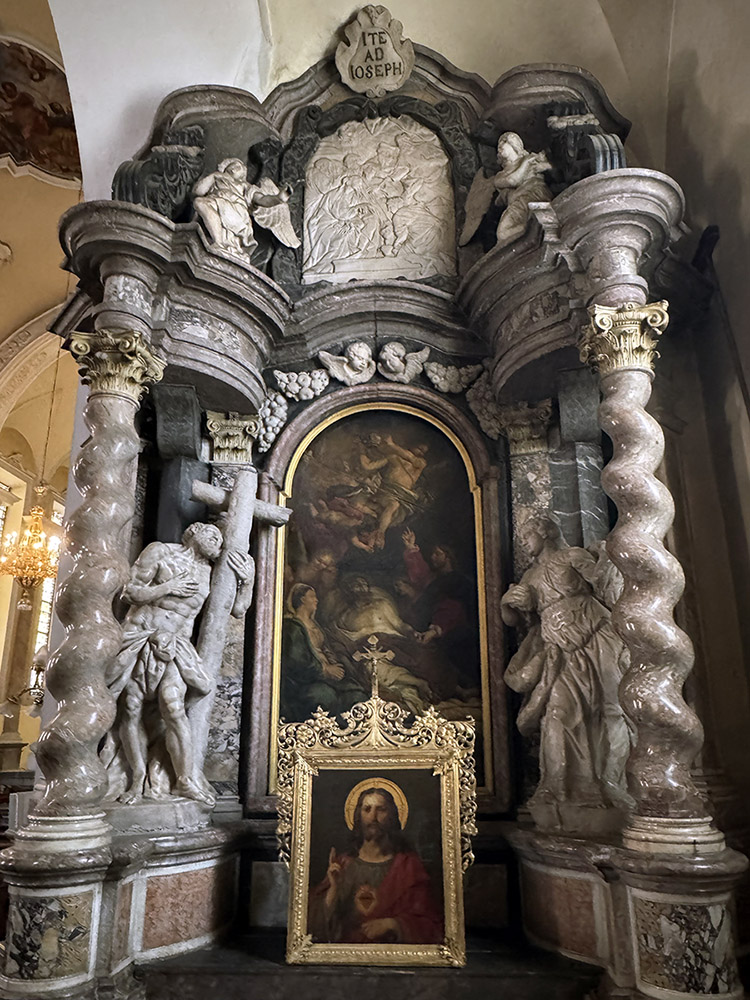
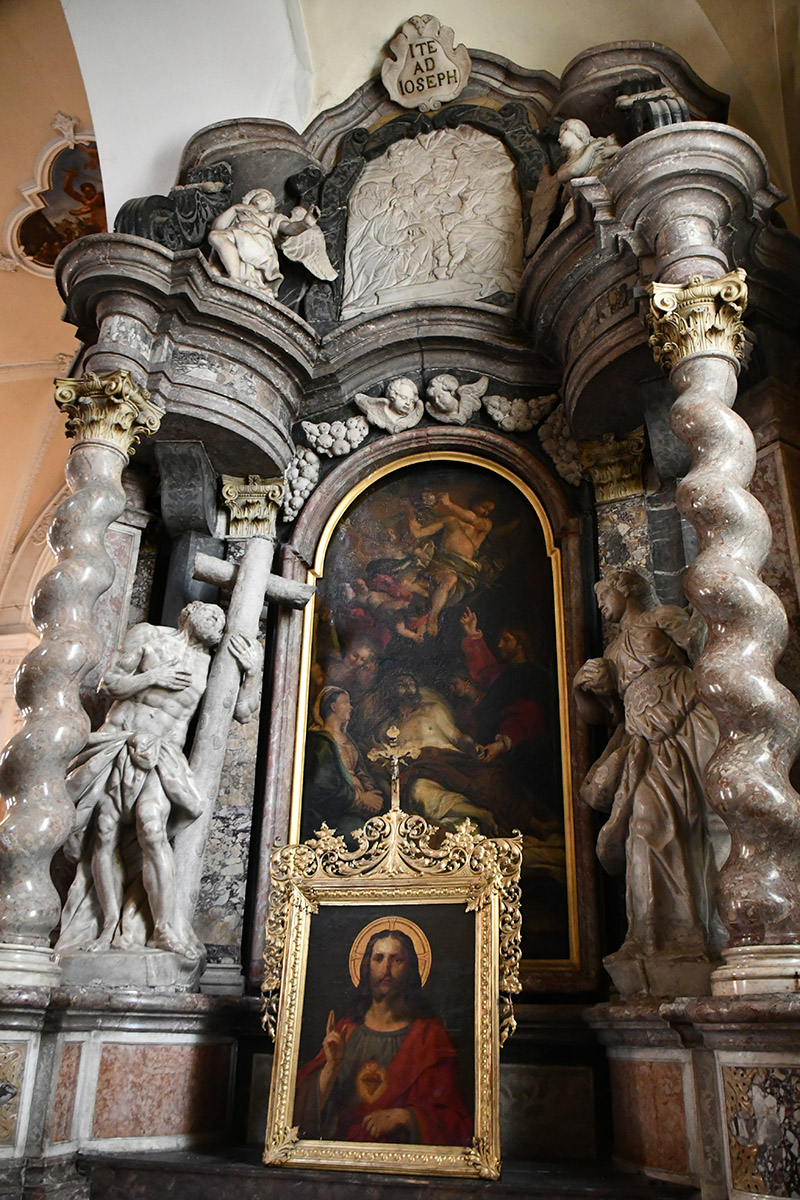
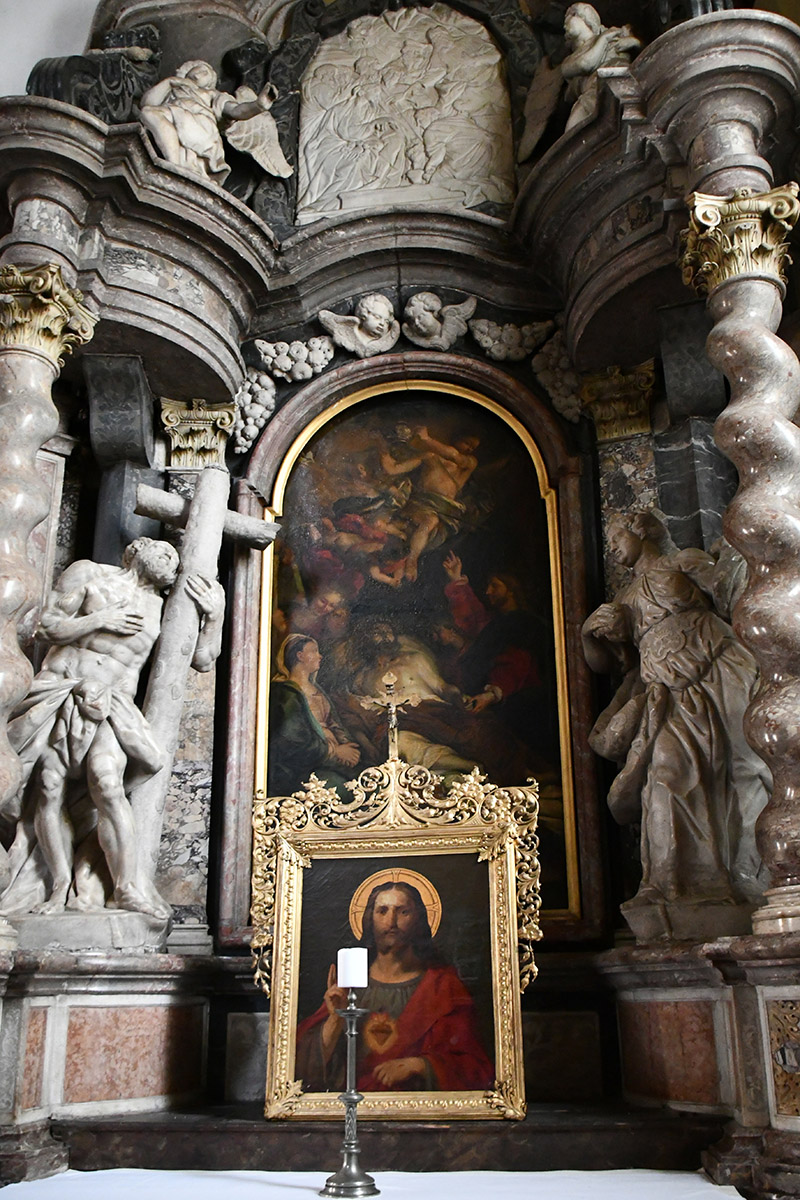
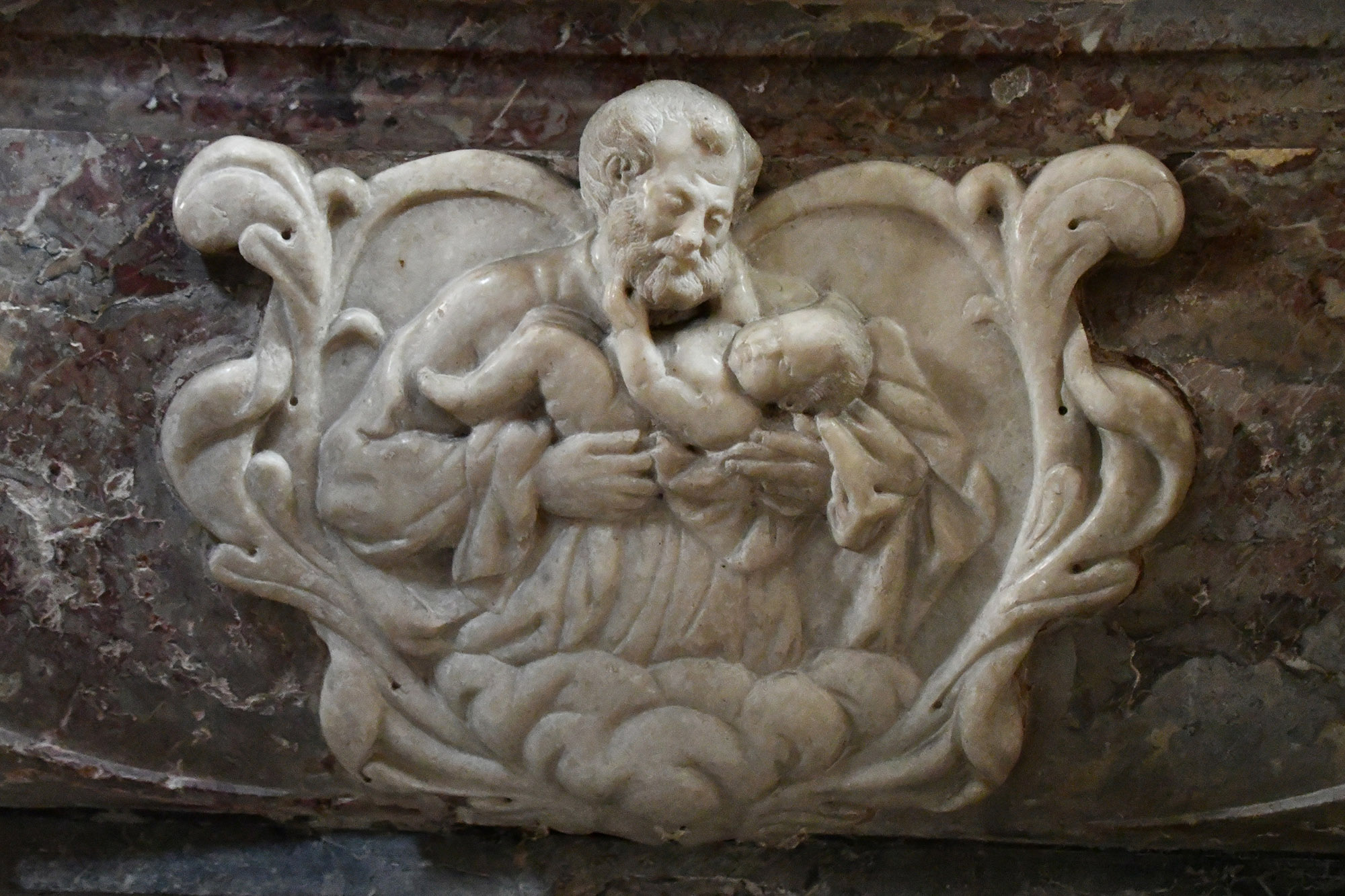
The Altar of St. Joseph stands in the third chapel on the right (second southern chapel) from the main altar and corresponds architecturally to the Altar of the Guardian Angels on the opposite side. In 1716, it replaced an older altar dedicated to St. Catherine and the holy martyrs. It was built for 1000 gold ducats donated in 1709 to the Jesuit college by Magister Joseph de Giorgio, who originally planned two altars but later commissioned only one – more splendid and dedicated to his patron saint.
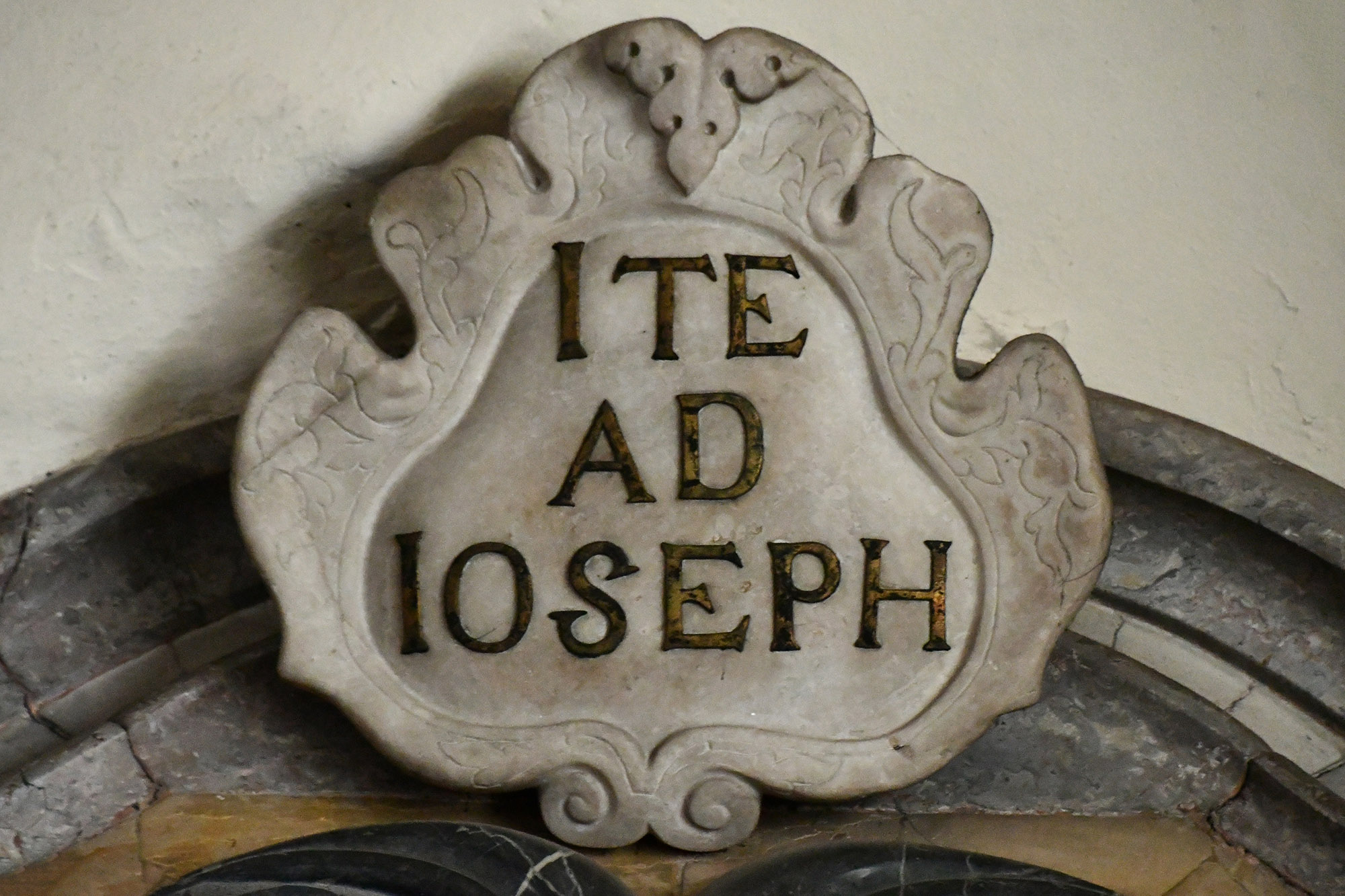
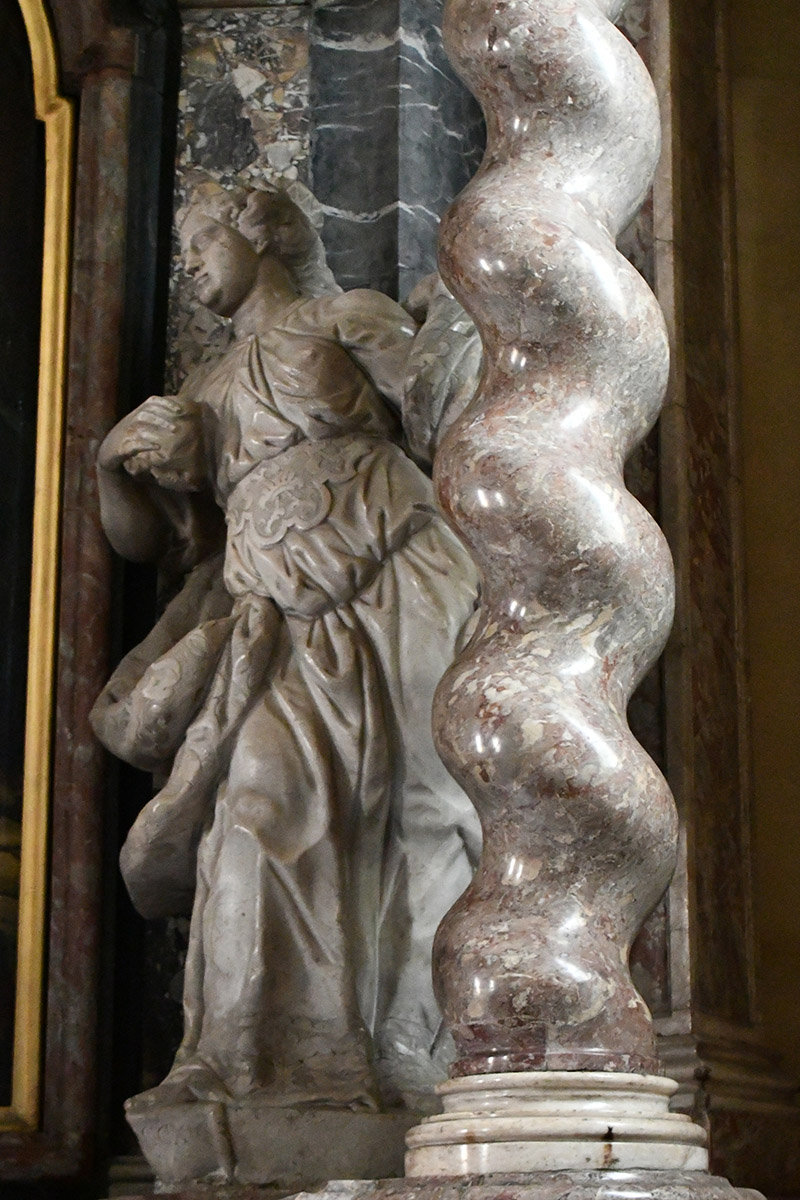
The architecture is distinctly Baroque: spatially dynamic and visually rich. Made primarily of imported colored and black marble, it features contrasting white marble sculptures. Two twisted columns on curved bases dominate the composition and accentuate its depth. These, along with pilasters, support an elaborate entablature and an attic framed by volutes, crowned with a cartouche bearing the inscription ITE AD IOSEPH. The convex altar table is adorned with scroll-like leaf motifs and a relief medallion of St. Joseph with the Christ Child.
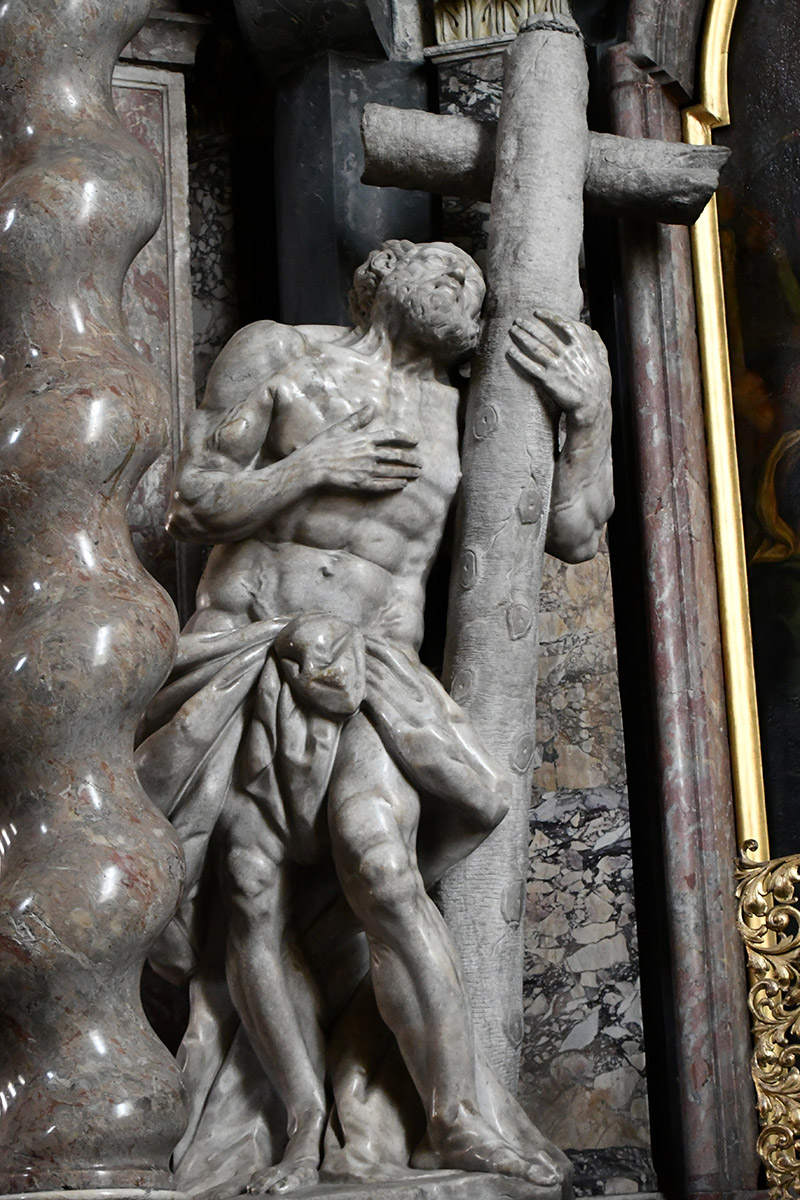
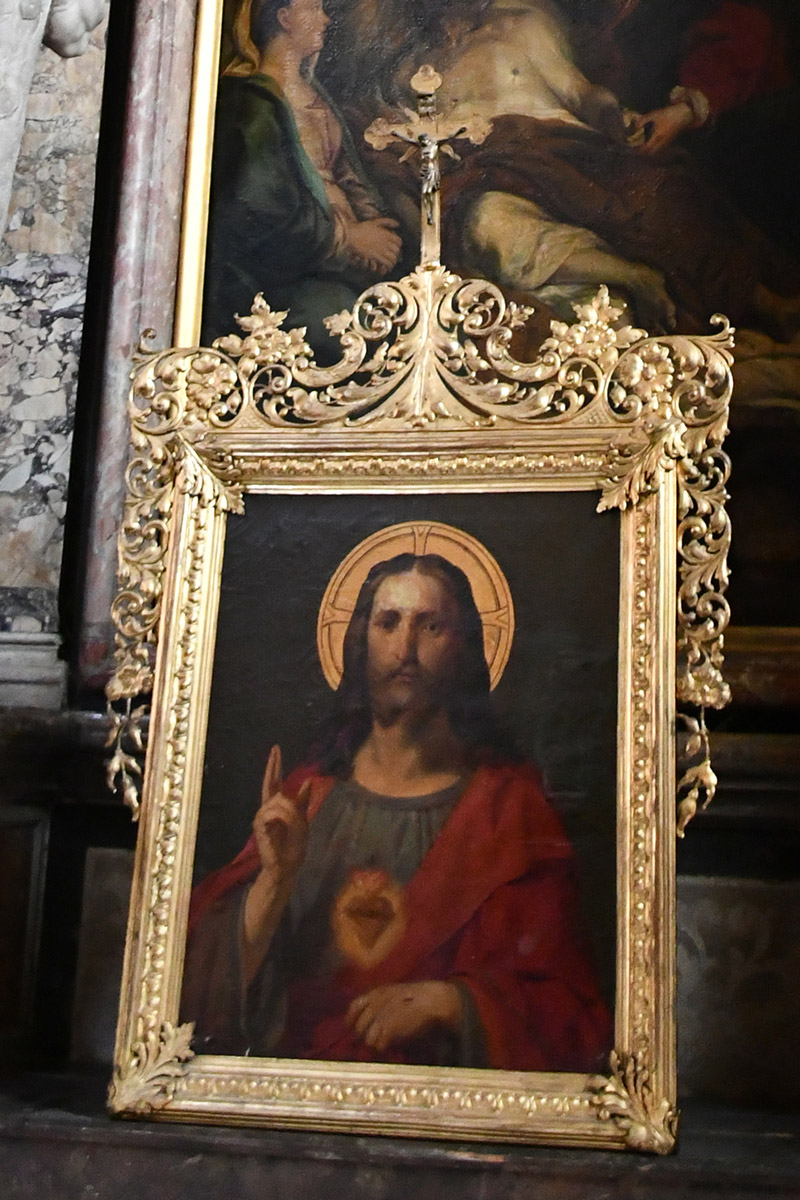
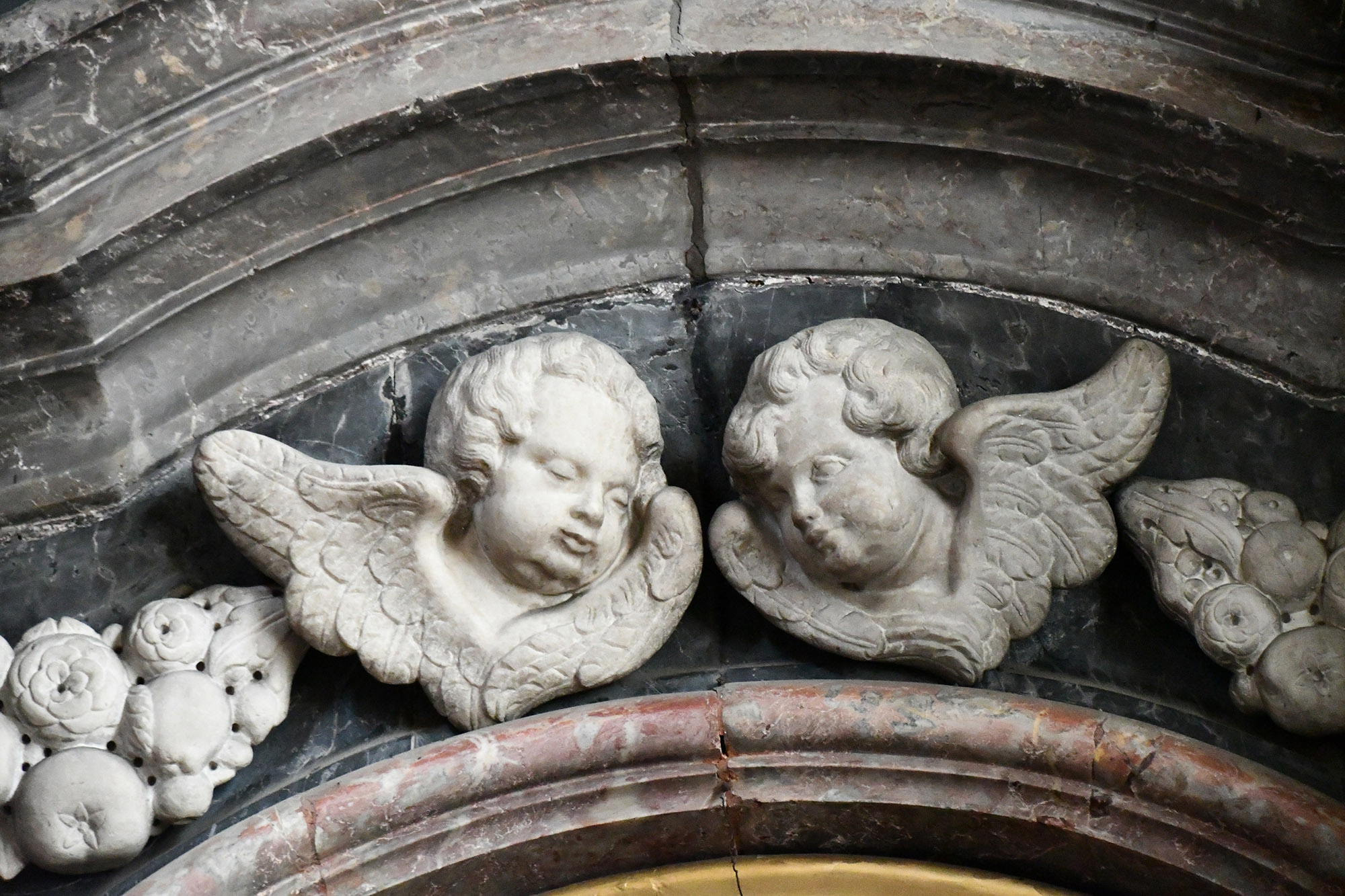
In the central niche above the altar stands the painting The Death of St. Joseph, attributed to Franz Karl Remb from Radovljica, painted in 1702 or 1710. On either side are statues of St. Dismas (left), the Good Thief, and St. Barbara (right), both considered intercessors for a happy death. Their sculptures are signed 1716 and were carved by the renowned Venetian sculptor Angelo de Putti. Above the main painting are two angel heads and two fruchtorns, and in the attic, a bas-relief of The Betrothal of Mary, flanked by kneeling angels with outspread wings (partially truncated due to spatial constraints). The image of the Sacred Heart of Jesus on the altar table is by Josef Plank (1860).
All sculptures are unmistakably the work of Angelo de Putti, who significantly influenced the baroque sculptural style in Carniola. Even if the altar was executed by another master (possibly Francesco Robba or Luka Mislej), de Putti likely played a decisive role in its design.
St. Joseph, husband of Mary and foster father of Jesus, enjoyed growing veneration from the late 17th century, especially thanks to the Jesuits. In 1870, Pope Pius IX declared him patron of the Universal Church. In 1955, Pope Pius XII instituted the feast of St. Joseph the Worker on May 1st, aligning him with the dignity of labor.
St. Barbara (feast: Dec 4), a 3rd-century martyr, is a patron of miners, architects, and the dying. St. Dismas (feast: Mar 25) is remembered as the repentant thief crucified alongside Jesus: “Lord, remember me when you come into your kingdom.