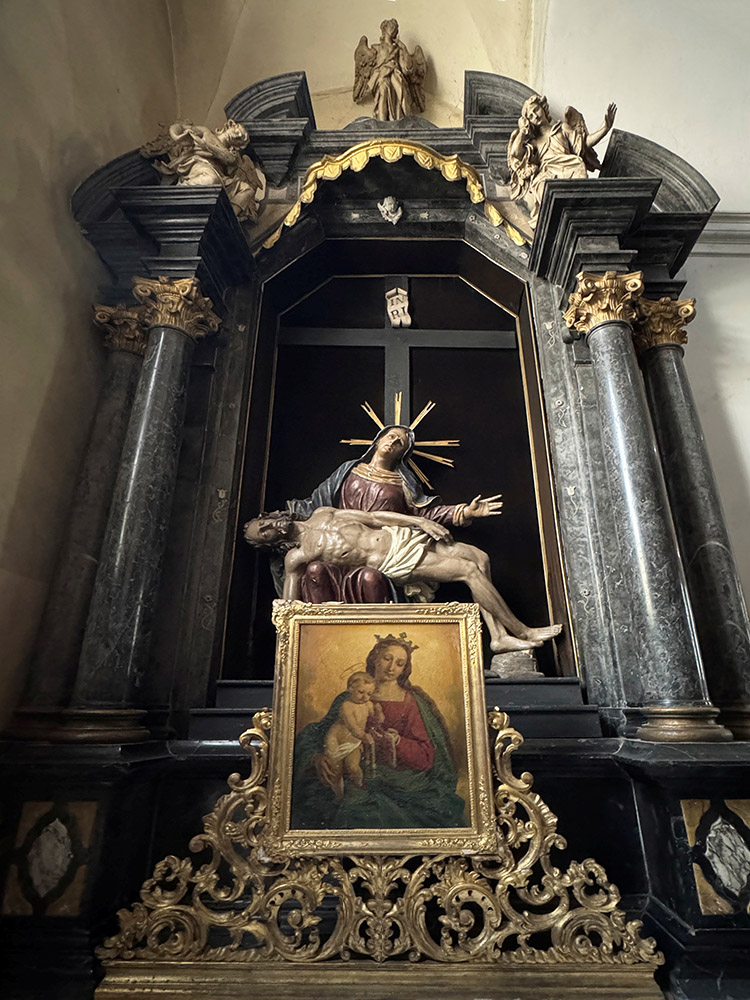
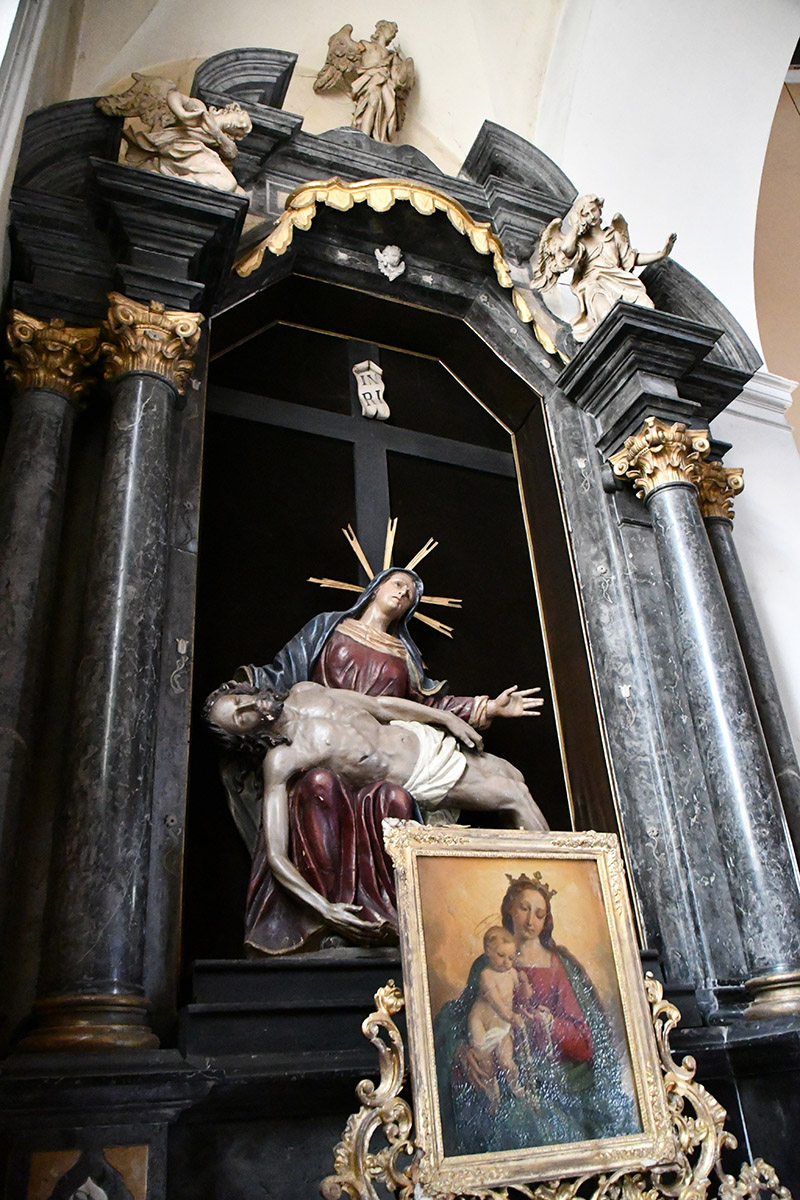
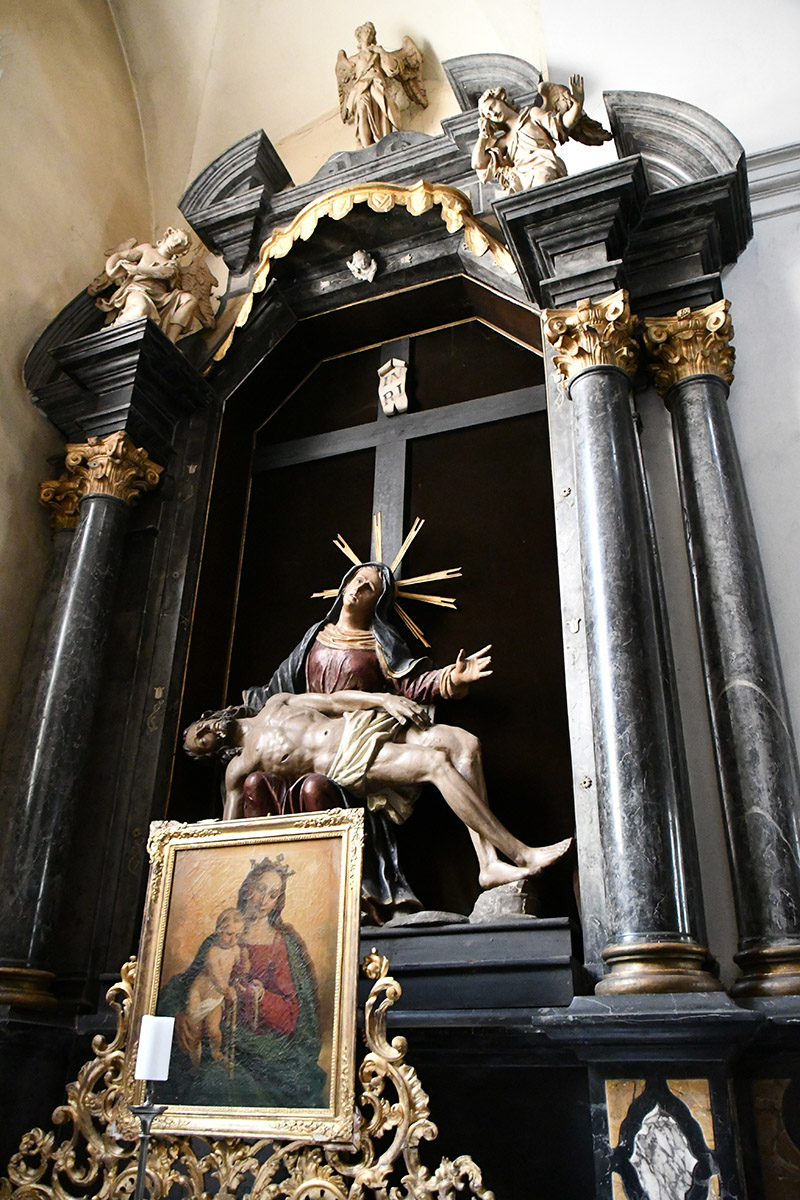
The Altar of Our Lady of Sorrows is made of black stone and was erected around 1680. Its architecture follows the Venetian Baroque tradition and is related to the work of the stonemason Mihael Kuša.
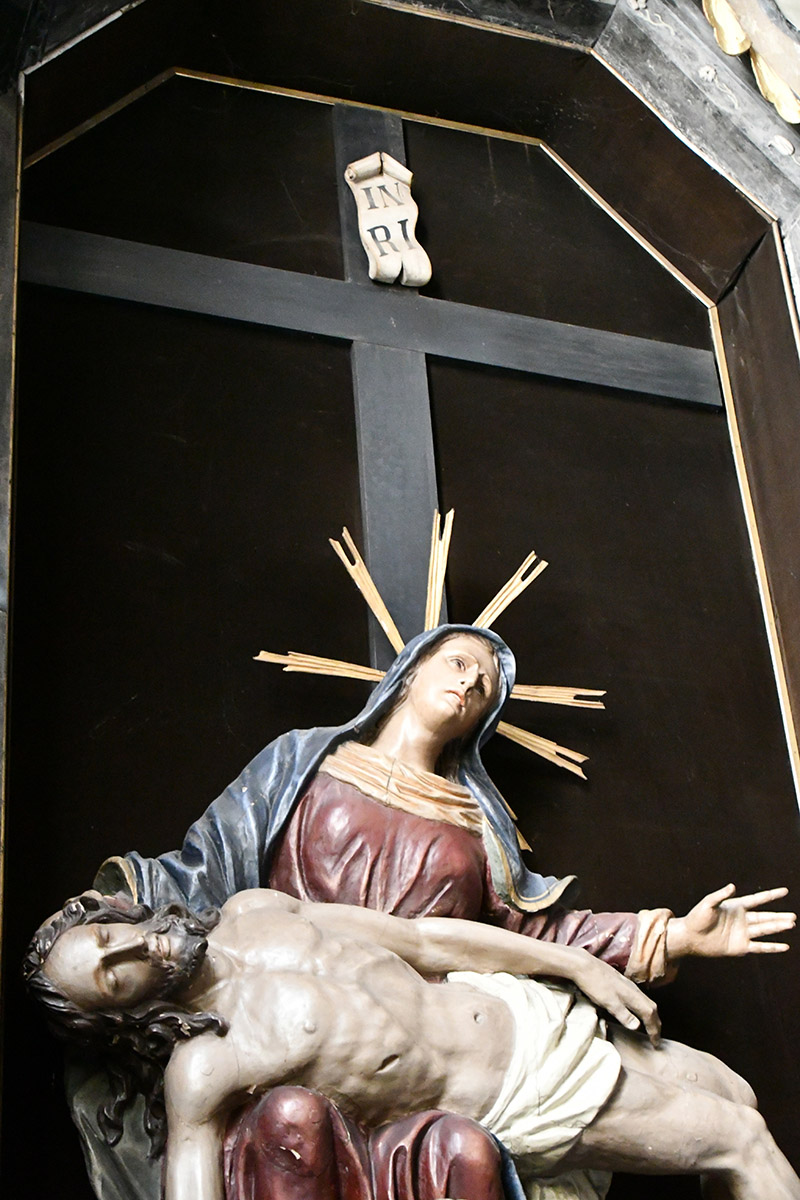
In the niche stands a 19th-century sculpture of the Pietà, while three Baroque angels from the 18th century sit above.
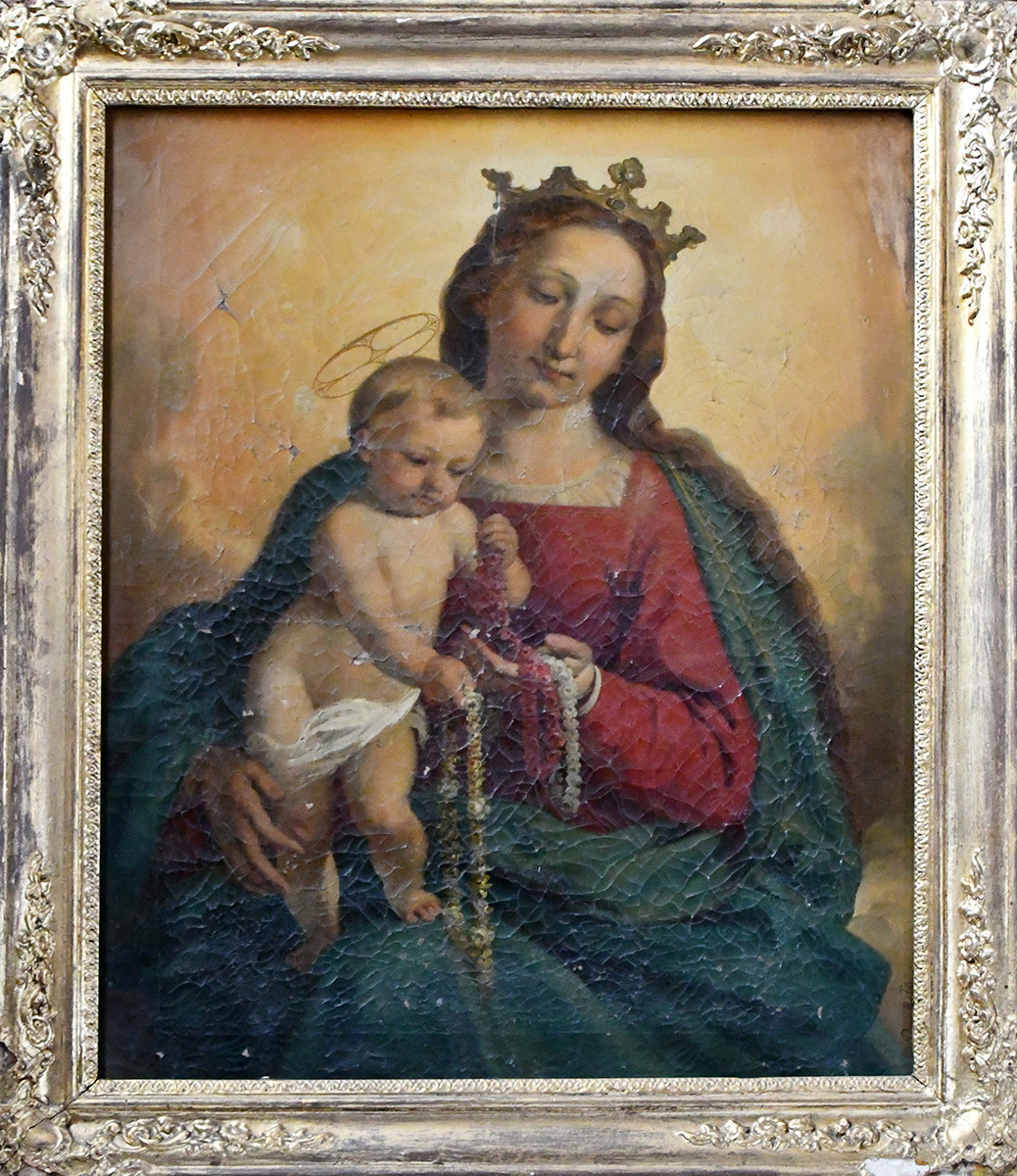
Below the mensa is a painting of St. Mary Magdalene, and on the mensa a depiction of the Madonna of the Rosary, painted by Josef Plank in 1860. The altar expresses the mystery of suffering and Mary’s compassion.
The Altar of Our Lady of Sorrows is one of the oldest surviving Baroque altars in St. James’s Church, probably erected in 1680 or 1681, a year after the Confraternity of the Agony of Christ placed a large Pietà sculpture in the chapel. It was built during a period when black marble altars, inspired by Venetian sacred art, became widespread across Carniola. These altars were typically produced by prominent Ljubljana stonemasonry workshops, especially those of Mihael Kuša and his successor Luka Mislej, who had a significant impact on early Baroque church furnishings in the region.
The altar is made of black stone, with a distinctly flat and restrained architectural composition, typical of early Baroque. Its design is symmetrical to the Altar of the Holy Cross on the opposite side of the church. Above the open mensa, supported by square balusters, rises a structure of two pairs of smooth columns. Between them lies a shallow niche with a trapezoidal top, extending into a low attic, also topped by a segmented cornice. The stark black architecture is enhanced by colored inlays on the mensa, the base of the columns, and the interior of the niche, forming a harmonious and meditative space.
Inside the niche stands the sculpture of Our Lady of Sorrows (Pietà), which is no longer original. The present 19th-century statue replaces an earlier one, yet retains the essential motif of Mary mourning her crucified Son. Atop the attic is a central angel figure, flanked by two kneeling angels beneath a small wooden baldachin—baroque additions carved in the 18th century that contribute emotional richness and artistic flair. Beneath the mensa is a mid-18th-century painting of Mary Magdalene in mourning.
The mensa also features a painting of the Rosary Madonna, created in 1860 by the Viennese painter Josef Plank. Plank is also known for his depiction of Our Lady of Sorrows on the opposite altar. His soft color palette and tender expression deepen the spiritual resonance of the altar, which invites reflection on suffering, compassion, and the profound faith of Mary. This altar stands as a valuable example of early Baroque art and a powerful witness to Marian devotion.
This post is also available in DE, ES, FR, SI, IT, PL and SI.