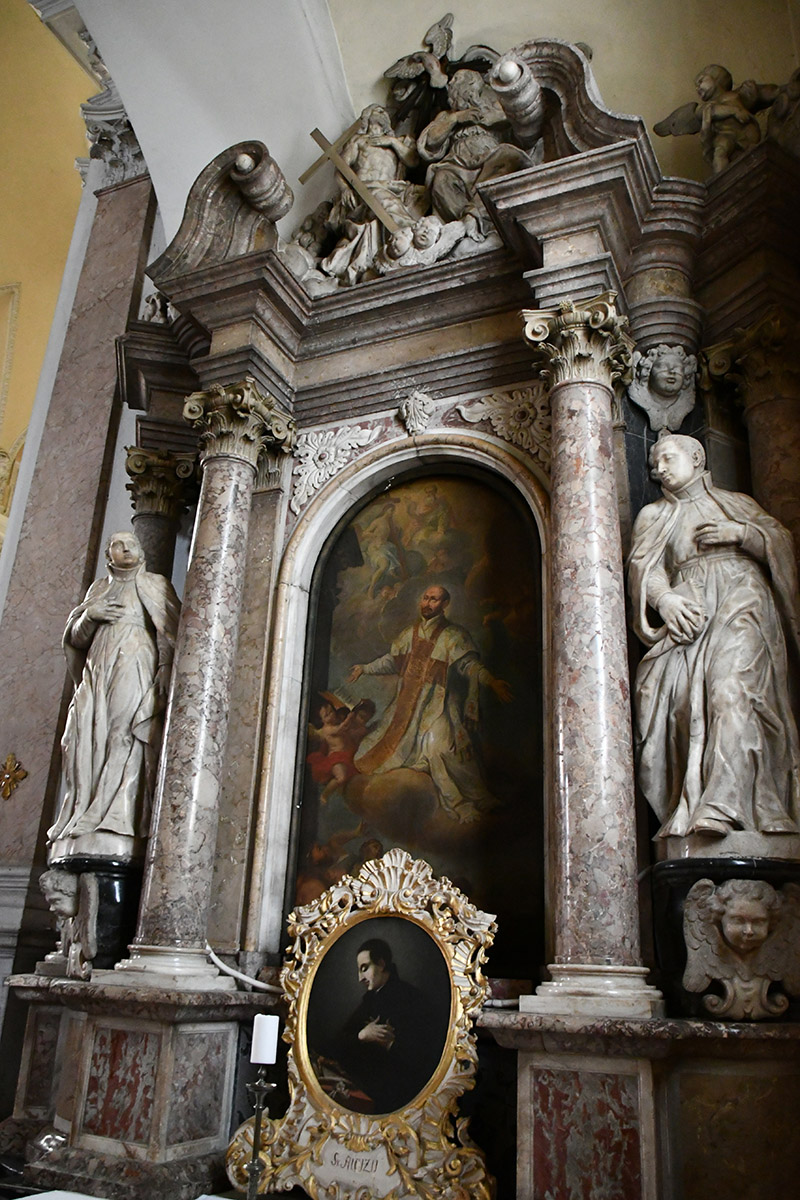
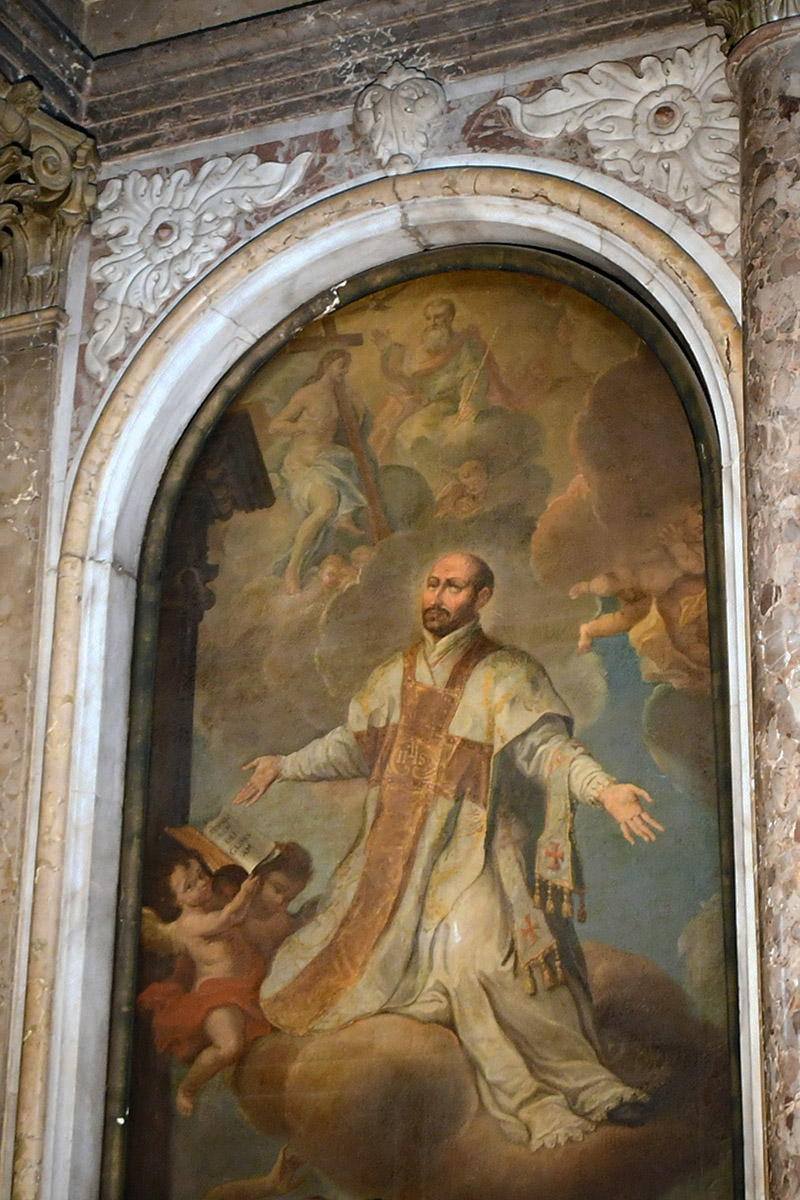
The Altar of St. Ignatius of Loyola, built in 1714, honors the Jesuit founder alongside St. Stanislaus Kostka and St. Aloysius Gonzaga.
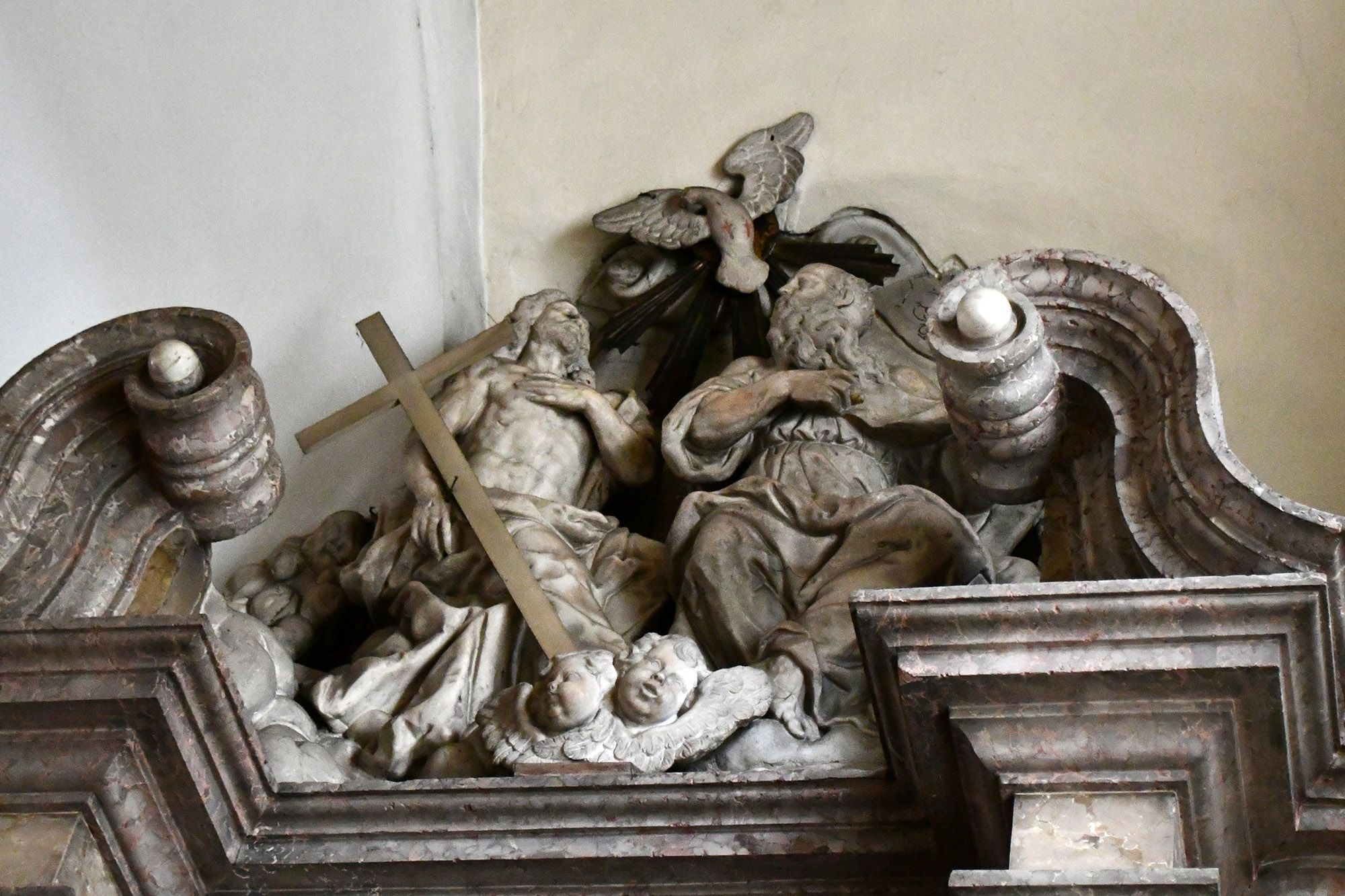
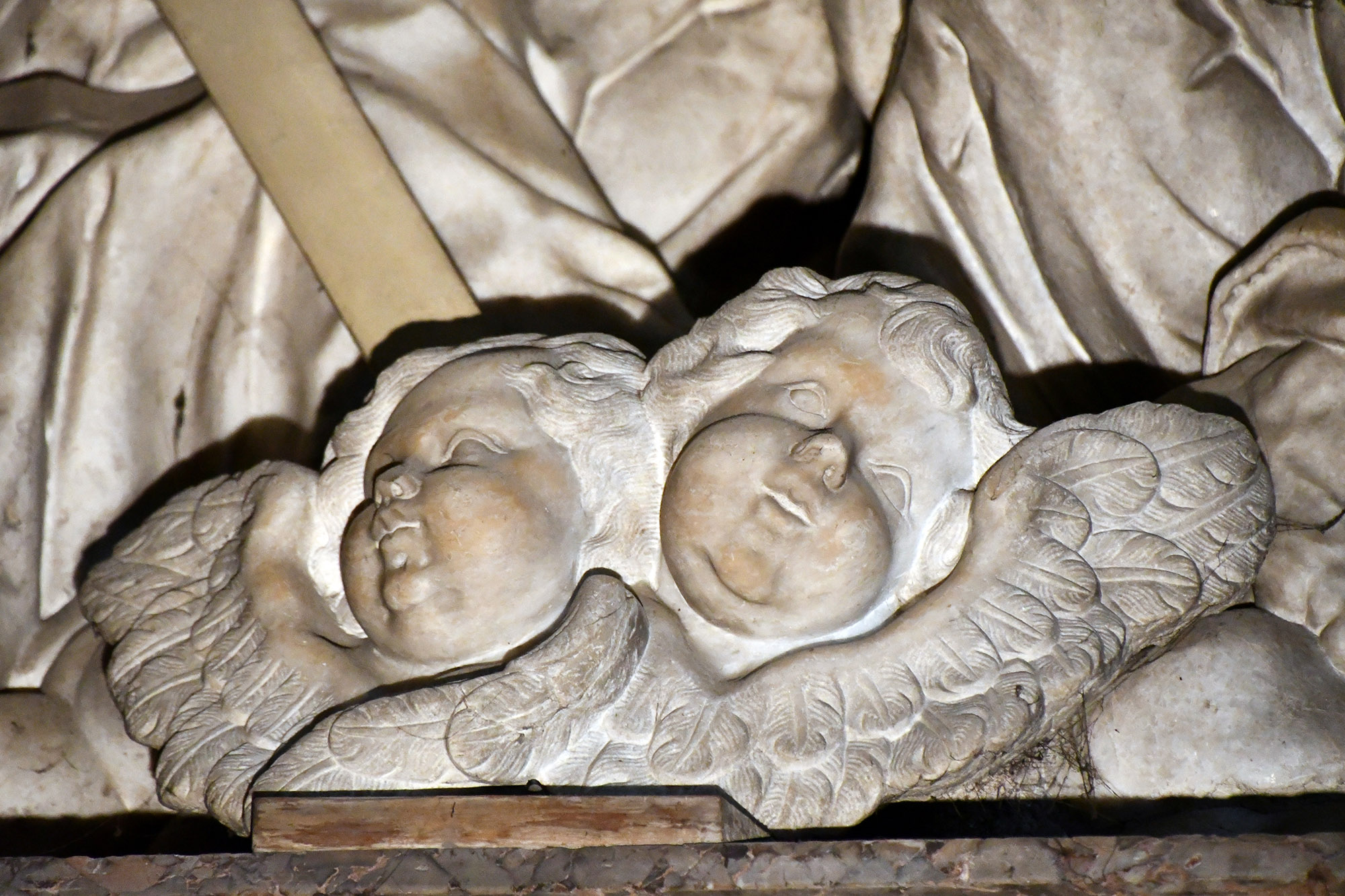
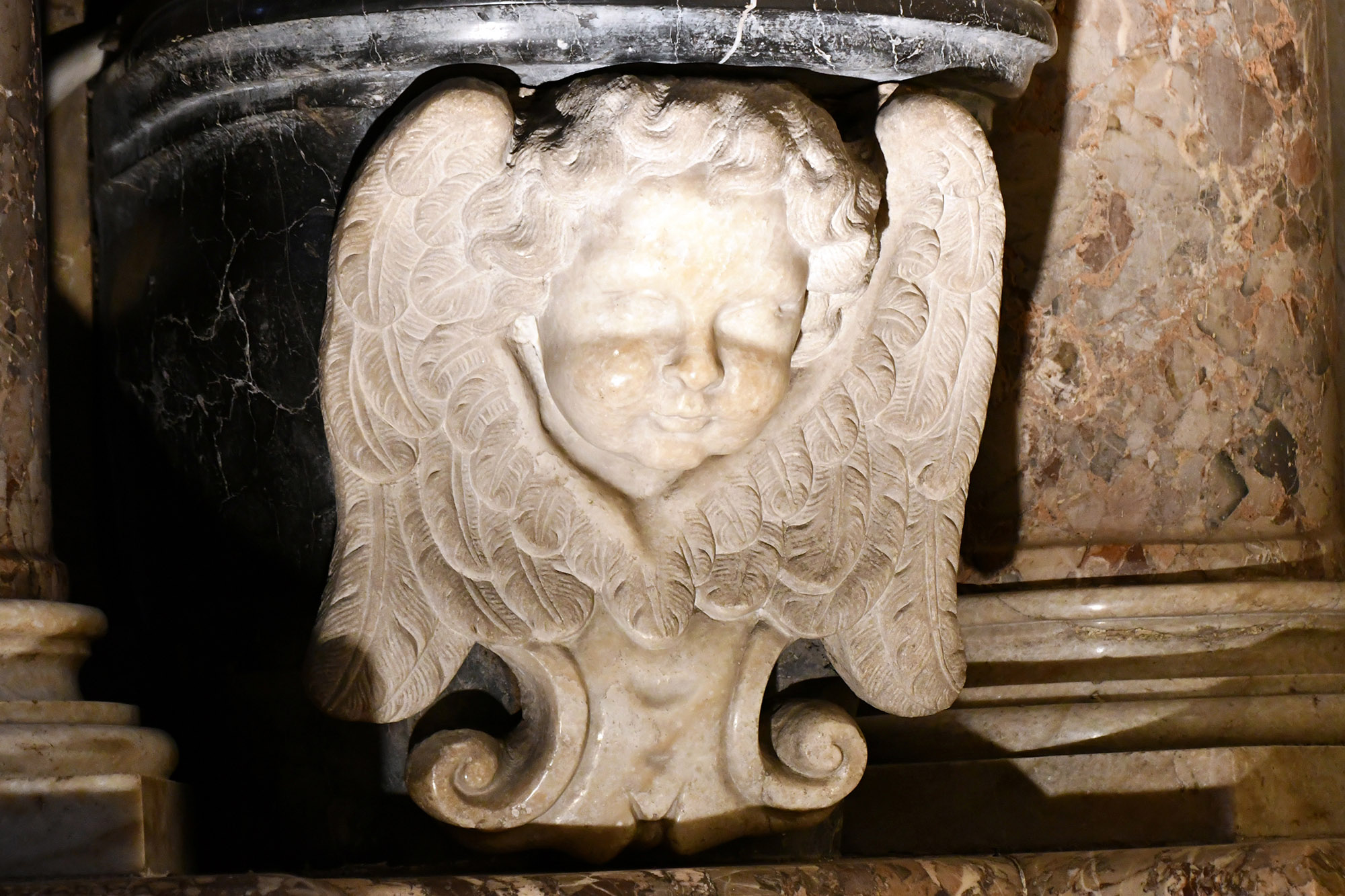
Its richly decorated Baroque design by Angelo Putti features the Holy Trinity, angelic figures, and ornate symbolism.
Originally painted by Bambini, the altarpiece was later replaced by J. V. Hauckh.
The altar reflects the deep Jesuit presence in Ljubljana and long-standing devotion to St. Ignatius.
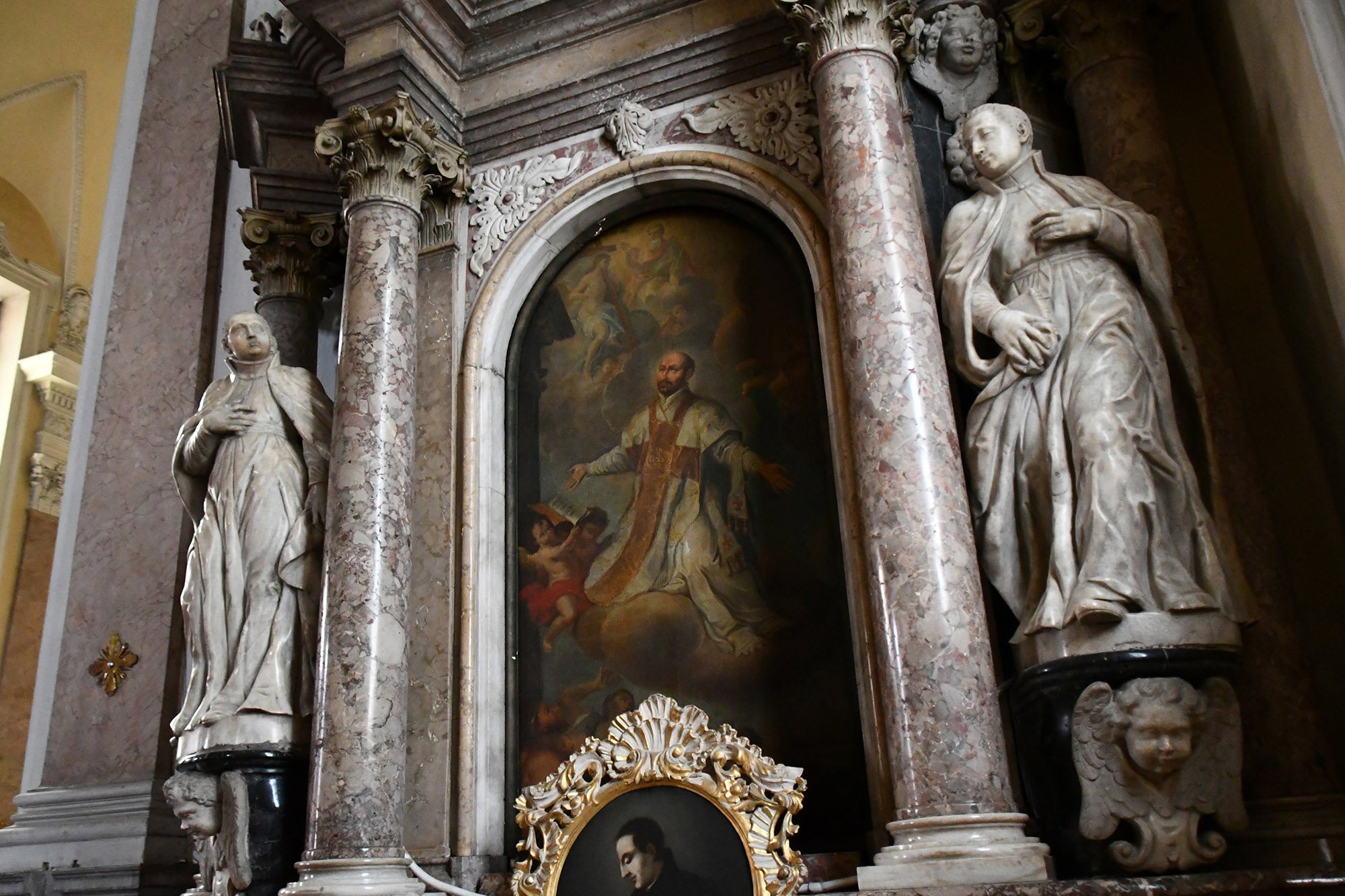
The altar of St. Ignatius of Loyola was erected in 1714. Its construction was made possible by Baron Peter Anton Codelli, who donated 1000 gold coins, and Adam Lamberg, who contributed 300. Architecturally, the altar corresponds to the Altar of the Assumption of Mary on the northern side. It features a pair of smooth columns made of light pink marble and a restrained Baroque structure with a profiled entablature and volute crowning. The prismatic altar table is adorned with two standing angels and luxuriant vine-like foliage, with a cartouche bearing the Christogram IHS at the center. Between the columns stand statues of St. Stanislaus Kostka and St. Aloysius Gonzaga, carved by the Paduan sculptor Angelo Putti. Their rather stiff posture may reflect the fact that they had not yet been canonized at the time of the altar’s construction—they were canonized only in 1726. Above the columns, two angels hold a scroll with the inscription Quam sordet mihi tellus, dum caelum aspicio (“How worthless the earth seems to me when I gaze upon heaven”). In the attic of the altar is a sculptural group of the Holy Trinity: God the Father, Christ the Son, and the Holy Spirit in the form of a dove.
The original altarpiece of St. Ignatius was painted by the Venetian artist Niccolò Bambini but was replaced in 1732 for unknown reasons by the present painting by Johannes Veit Hauckh. St. Ignatius is depicted as a priest wearing a chasuble with the IHS symbol on his chest, kneeling on a cloud with arms raised toward heaven. In the open book held before him by two angels, we read his famous motto: Ad maiorem Dei gloriam – “To the greater glory of God.”
The altar also features two other important Jesuit saints: St. Stanislaus Kostka (1550–1568), patron of youth and students, and St. Aloysius Gonzaga (1568–1591), who died while caring for plague victims. Both are shown in Jesuit attire, though without their typical attributes such as lilies, a crucifix, a rosary, or a skull.
The first Mass at this altar was celebrated on Pentecost Sunday, May 20, 1714. That same year, a novena in honor of St. Ignatius was also introduced. The altar serves as a place of prayer and memory for a saint who played a crucial role in the Catholic Reformation of the 16th century and left a lasting mark on the city of Ljubljana.
This post is also available in DE, ES, FR, SI, IT, PL and SI.